Culture & Landmarks
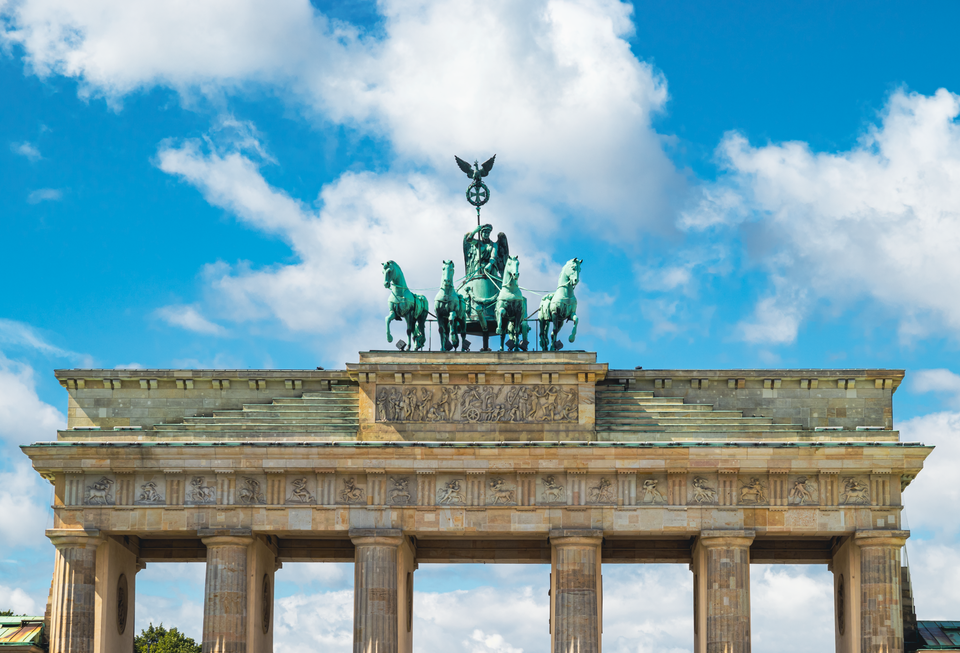
Porte de Brandebourg

Berlin is the only European capital where you can swim in a lake ringed by forest twenty minutes from a neoclassical museum island, dance until Tuesday in a derelict power plant, and still find a line wrapping around the block for a kebab stand at 3 a.m. The wall fell thirty-five years ago, but its ghost still organises the city—graffiti runs for 1.3 kilometres along the open-air gallery where East met West, and whole neighbourhoods still feel like they're mid-argument about what comes next.
Berlin deserves 4–5 days according to Lamaglide's analysis of 175 verified places with measured visit durations. Top sights include Museum Island, Mustafa's Gemüse Kebap, and Kurfürstendamm.
The Spree makes a lazy oxbow in the heart of Mitte, and inside that bend sit five museums on a single , the Museumsinsel—neoclassical temples with columns wide enough to hide behind, built when Prussia wanted the world to know it had culture to burn. The holds Nefertiti's limestone bust behind glass in a dim rotunda; the queue starts forming by 9 a.m., and by midday you're shoulder to shoulder with school groups whispering in four languages. Next door, the unfurls a painted reconstruction of the ancient city of Pergamon in a 360-degree cylinder—you walk the metal viewing platform and lose twenty minutes to a painted illusion of marble and sky.
Step off the island and the rises with its green-copper dome and gilt crosses, an emperor's counter-argument to the Protestant north. Inside, the organ has 7,269 pipes; on Sunday mornings the sound fills the nave like warm bread dough rising. Climb the 270 steps to the dome's outer walkway and you'll see the TV tower's needle pricking the eastern horizon, the glass cupola of the Reichstag catching late sun to the west, and below, the slow curve of the Spree carrying tour boats painted the colour of old trams.
By the river's edge near Bodestraße, couples sit on the stone embankment with their shoes off, legs dangling, sharing pretzels from a paper bag. At 7 p.m. in June the light turns honey-gold and the museum façades glow like old photographs—this is the moment Berliners call Feierabend, the sacred threshold between work and the rest of your life.
_The_Monument%26Atelier_van_Lieshout%262015.jpg?width=960)
The island was conceived as a 'sanctuary for art and science' in the 1840s, and five separate museums now share the same UNESCO-listed ensemble—Altes Museum, Neues Museum, Alte Nationalgalerie, Bode-Museum, and Pergamonmuseum. A new promenade called the Archäologische Promenade links their basements into a single underground route, though sections remain under construction. On summer evenings, the courtyards between museums become impromptu picnic grounds where students drink Späti-bought beer and argue about Hegel.

The building itself is a palimpsest—architect David Chipperfield restored the bomb-damaged sections without hiding the scars, so you walk through rooms where nineteenth-century frescoes stop mid-scene at a ragged edge of bare brick. The Egyptian collection includes not just Nefertiti but also the Green Head, a priest's portrait in polished stone so lifelike it unsettles. Temporary exhibitions often focus on ancient daily life—bread moulds, cosmetic jars, children's toys—which makes the distant past feel uncomfortably close.

The panorama painting is 30 metres in diameter and wraps around a circular platform suspended in the middle—artist Yadegar Asisi spent years researching Pergame's architecture to paint every column and rooftop. You're standing where the ancient agora would have been, and the perspective is so precise that your brain half-believes the market stalls are real. Ambient sound effects—footsteps, distant voices, birds—are mixed just loud enough to make you glance over your shoulder.

The crypt downstairs holds nearly 100 Hohenzollern sarcophagi in white marble and black stone, some carved with sleeping faces, others austere as shipping crates. The imperial staircase is pure bombast—red carpet, gold balustrades, ceiling frescoes of apostles ascending—designed to remind you that Prussia took its Protestantism seriously but its theatre even more so. During services, the acoustics are so generous that a single soprano can fill the dome without amplification.
The stretches 1.3 kilometres along Mühlenstraße, the longest open-air gallery in the world and the longest surviving stretch of the Berlin Wall. One hundred and eighteen artists painted it in 1990, right after the fall—Dmitri Vrubel's socialist fraternal kiss, Birgit Kinder's Trabant crashing through concrete. The paint flakes now, tagged over by tourists with Sharpies, but on a quiet morning in April when the lime trees are just leafing out, you can still feel the weight of what it meant to stand on the wrong side of this thing.
A fifteen-minute walk south, past the canal where swans nest in the reeds, draws a line of fifty people every lunchtime. The man behind the counter layers grilled chicken, fried halloumi, tomatoes, cucumber, lemon, mint, and a red-pepper sauce that has a faint sweetness underneath the char. You eat standing up on the pavement, sauce dripping onto your wrist, and it tastes like Berlin in a way no sit-down meal ever will.
Further west, the sits on the exact site where the Gestapo and SS headquarters stood until 1945. The exhibition is outdoors, weatherproof panels along a stretch of original Wall foundation, photographs of interrogation cells and deportation lists. It's free, it's unflinching, and by the time you reach the end you'll need to sit in the gravel courtyard and let the silence do its work. This is the city that refuses to cover up its worst century.
.jpg?width=960)
The gallery runs along Mühlenstraße between Oberbaumbrücke and Ostbahnhof, and it's the longest surviving stretch of the Wall because it stood on the East German side—too far from the death strip to be pulled down by souvenir hunters in 1989. Some murals have been restored multiple times, others are barely visible under layers of tourist graffiti and weather damage. At the southern end, a small plaque lists the 140 people who died trying to cross the Berlin Wall between 1961 and 1989.

Mustafa Demirağ opened the stand in 2006, and within a year people were queueing for an hour at lunchtime—not because of marketing, but because the recipe is generous, balanced, and hasn't changed. The bread is baked fresh every few hours at a nearby bakery; the vegetables (tomatoes, red cabbage, cucumber, mint, arugula) are grilled or pickled in-house; the halloumi gets a quick sear on the flat-top. It's €6.50 for a kebab that barely fits in two hands, and it's better than half the sit-down restaurants in the city.

The exhibition is chronological and forensic—photographs, documents, organizational charts—arranged along the excavated foundation of the Gestapo prison cells. There's no dramatization, no mood lighting, just typescript and testimony. A section on the Wannsee Conference shows the minutes from the meeting where the 'Final Solution' was formalized, bureaucratic language describing genocide in the passive voice. Another section documents the 'euthanasia' programme that killed 70,000 disabled Germans before the camps were even built. It's free, open-air, and unbearable in the best sense.
is where Berlin kept its champagne during the Cold War—the western showcase, the part that got the Marshall Plan money and the department stores with escalators. The runs three and a half kilometres of plate glass and linden trees, and halfway down sits the , its broken spire left jagged on purpose, a Gothic stump next to a modern blue-glass honeycomb chapel. Inside, 20,000 small glass blocks filter the light into deep blue twilight; at noon it feels like standing underwater.
At the boulevard's eastern end, the rises seven floors high—built in 1907, bombed in 1943, rebuilt with an entire floor dedicated to food. The sixth floor is a temple to excess: 400 types of bread, oysters on ice, a champagne bar where office workers perch at 6 p.m. with a glass of Ruinart and a tin of Kaviari. You don't come here to save money; you come to understand what West Berlin spent forty years trying to prove.
Two kilometres west, Schloss Charlottenburg sits in formal gardens that turn white with crocuses in March. The palace is baroque wedding-cake architecture—Frederick I built it for his wife Sophie Charlotte in 1699, and inside you'll find rooms panelled in Chinese silk, a porcelain collection spanning two centuries, and a long gallery where afternoon sun slants across parquet floors that creak under your feet like ship timbers.

The palace began as a modest summer retreat in 1695 and grew into a baroque complex after Frederick I crowned himself King in Prussia in 1701—he added wings, gardens, an orangery, and a mausoleum where his second wife Queen Luise is entombed in white marble. The Porzellankabinett holds 2,700 pieces of Chinese and Japanese porcelain arranged floor-to-ceiling in mirrored cabinets, an eighteenth-century flex of colonial trade wealth. In the gardens, gravel paths lead past topiary hedges and a carp pond where goldfish the size of small cats drift under lily pads.
_6.jpg?width=960)
West Berlin's grand boulevard, 3.5 km of plate glass and linden trees laid out from 1886 on Bismarck's orders. The "Ku'damm" was capitalism's shop window during the Cold War and remains the city's upscale shopping axis.

The church's neo-Romanesque spire was completed in 1895 and hollowed out by a British bomb in 1943; after the war, Berliners voted to keep the ruin standing as a memorial. The new chapel, designed by Egon Eiermann in 1963, is an octagonal tower clad in 20,000 stained-glass blocks cast in France—when you step inside, the blue light is so saturated it feels like you're inside a sapphire. On the hour, a carillon of six bells plays from the old tower's surviving base.

KaDeWe stands for Kaufhaus des Westens—Department Store of the West—and it was built to rival Harrods and Galeries Lafayette, a statement that Berlin's western half was cosmopolitan and capitalist and not going anywhere. The sixth-floor food hall is still the main attraction: oyster bar, champagne bar, sushi counter, patisserie, charcuterie with Ibérico hanging from hooks, a cheese cave with 1,200 varieties. At Christmas, the top floor becomes a market selling hand-carved Erzgebirge nutcrackers and stollen in wooden crates.
Charlottenburg is where Berlin kept its champagne during the Cold War—the western showcase, the part that got the Marshall Plan money and the department stores with escalators.
Prenzlauer Berg gentrified in a hurry after reunification—the crumbling Altbau tenements got new plaster, the cobbles got reset, and now the streets are lined with organic bakeries and pram-traffic jams. But on Sunday morning the takes over the old death strip with 200 stalls selling Soviet-era camera lenses, hand-printed posters, vintage Adidas tracksuits, and LP records someone's Oma kept in a cellar for thirty years. By noon a crowd gathers around the amphitheatre for bearpit karaoke—strangers sing Bowie and Nena under open sky while a thousand people clap off-beat.
Five stops south on the U-Bahn, squats in a former power plant on the Friedrichshain side, its concrete façade blank as a fortress. The door policy is famously opaque—wear black, don't talk too much, and maybe you'll get the nod from Sven at 2 a.m. Inside, the Panorama Bar floods with daylight on Sunday afternoon while the main floor stays dark; the Funktion-One sound system is tuned to frequencies you feel in your ribcage, and people dance for sixteen hours straight without phones, without photos, without explanation.
At the northern edge of the neighbourhood, the preserves a 200-metre stretch of the original Wall with its death strip intact—watchtower, steel barriers, raked gravel. The visitor center shows two films on loop; you can climb the viewing platform and look down on the doubled wall, the no-man's-land between, and imagine what it meant to see this from your fourth-floor apartment window every single morning for twenty-eight years.
.jpg?width=960)
The market takes over the western edge of Mauerpark every Sunday from 9 a.m. to 6 p.m., spreading across the old Wall's path with vintage furniture, handmade jewellery, screen-printed tote bags, Soviet military watches, and crates of vinyl records labelled by decade. Sellers are a mix of professional dealers, art students funding their rent, and retirees clearing out attics. By 1 p.m. the crowd is dense enough that you move in currents, and the smell is cardamom from the coffee stands and grilled halloumi from the food trucks.

The building is a former East German power plant, and the architecture is brutalist functionalism—raw concrete, steel beams, and windows nine metres tall. The main floor (Berghain) is techno-purist: 140+ BPM, no photos, no mercy. The Panorama Bar upstairs is house and disco, with floor-to-ceiling windows that let in Sunday-afternoon daylight while people are still dancing from Saturday night. The door policy is opaque by design—dress dark, don't be loud or drunk in the queue, put your phone away, and maybe Sven or his colleagues will let you in. Rejection is common and not personal.

The memorial stretches 1.4 kilometres along Bernauer Straße, preserving the only place in Berlin where both walls, the death strip, the watchtower, and the border-signal fence still stand in their original positions. The documentation center shows two films—one on escape attempts (tunnels dug under, hot-air balloons launched over), one on the families separated when the Wall went up overnight in August 1961. Across the street, the Chapel of Reconciliation was built on the foundations of a church that stood in the death strip and was blown up by the GDR in 1985.
Average temperatures, crowds and recommended windows — at a glance, month by month.
Climate normals 1991–2020, DWD (German Weather Service)
The Tiergarten erupts in crocuses and wild garlic, the Späti kiosks start selling Berliner Weiße again, and by late April you can sit outside at a Prenzlauer Berg café in shirtsleeves while the chestnut trees leaf out overhead—the city shakes off its grey winter coat and remembers how to smile.
Lakes like Wannsee and Müggelsee fill with swimmers and sailboats, every park becomes a beer garden, and open-air clubs along the Spree don't close their doors until sunrise—but by mid-July the cobblestones radiate heat, the U-Bahn smells like warm bodies, and everyone who can afford it leaves for the Baltic coast.
September is Berlin's secret high season—warm days, cool nights, the maples in Viktoriapark turning flame-orange, and the theatre and opera houses reopening after summer break. By November the Christmas markets start setting up in Gendarmenmarkt and the light drops to a cold slant by 4 p.m., but the cafés stay warm and the Glühwein starts flowing.
The city turns inward—museum queues shrink, the club scene intensifies, and if snow falls it makes the Wall ruins and the Reichstag dome look like wartime photographs. Christmas markets sell Stollen and roasted almonds under strings of lights, but by January the sky stays grey for weeks and the wind off the Spree cuts through wool coats like it has a grudge.
Berlin eats early, eats standing up, and eats better than its reputation suggests. Currywurst under a U-Bahn bridge at midnight is a rite of passage, but so is a ten-course tasting menu built entirely from Brandenburg vegetables. The city's default mode is casual—no one cares if you're wearing sneakers, and most kitchens close by 10 p.m.—but the cooking can be as precise as anywhere in Europe when the chef wants it to be.
Pork sausage sliced into coins, blanketed in ketchup spiked with curry powder, paprika, and a faint edge of cayenne. The fries come thick-cut and salted, the whole thing arrives on a paper tray, and you eat it standing at a chest-high table on Mehringdamm while the U7 rattles overhead. It's been here since 1981, and the recipe hasn't changed because it doesn't need to.
Grilled chicken, fried halloumi, charred peppers, tomatoes, cucumber, arugula, mint, lemon juice, and a red-pepper sauce that has depth instead of just heat, all pressed into a sesame flatbread baked every few hours. The line wraps around the block on weekends, but it moves faster than you think, and the first bite—crisp bread giving way to warm, layered filling—justifies the wait.
Chef Micha Schäfer sources everything within Brandenburg—pike-perch from Spreewald lakes, sea buckthorn from the Baltic coast, rye bread from a mill outside Potsdam. The menu changes weekly and might include smoked celeriac with hazelnut oil, raw beef with fermented plum, or a single roasted carrot with its own broth. The dining counter faces an open kitchen; the wine list is all-German; the experience is as dogmatic and delicious as Berlin gets.
Two Michelin stars and a menu that borrows from Cantonese, Thai, and Japanese traditions without pretending to be any of them. Wasabi langoustine, Peking duck with cucumber and hoisin, miso-glazed cod with yuzu—the technique is European, the spice palette is not. The dining room is all dark wood and low lighting, and the service is Berlin-polite: efficient, unfussy, and happy to talk you through the menu if you ask.
Berliners split the bill by default—ask for 'getrennt zahlen' and the server won't blink. Tap water isn't free and often isn't offered; if you want it, ask for 'Leitungswasser' and most places will bring it without fuss. Tipping is 5–10% rounded up, and you hand it directly to the server when you pay, saying the total you want to pay rather than leaving cash on the table.
Our engine builds your days hour by hour, based on your actual dates.
Build my trip →The breakdown by category below — each range still depends on your choices.
4 nights: €400–700 total (2 people)
4 days, 2 people: €250–450 total
4 days, 2 people: €60–80 (welcome cards or day tickets)
4 days, 2 people: €90–170 (3–5 museums, palace, memorials)
The glass dome visit is free, but you must register online at least 2–3 days ahead (often weeks in summer)—walk-ins are refused. Bring photo ID.
Most museums on Museum Island, plus the Jewish Museum and DDR Museum, close Mondays. The Reichstag, memorials, and East Side Gallery stay open daily.
Many smaller restaurants, Späti kiosks, flea markets, and even some museums (Topographie des Terrors donation box) prefer or require cash—carry €50–100 in small bills.
Tickets aren't checked at gates (there are none), but plainclothes inspectors board trains and fine you €60 on the spot if your ticket isn't stamped. Validate before boarding.
Don't queue drunk, don't speak English loudly in line, dress dark and minimal, and accept that rejection is part of the experience. Sunday afternoon is statistically easier than Friday night.
On summer weekends, Neues Museum and Pergamon Panorama hit capacity by 11 a.m.—book timed-entry tickets online the night before to skip the queue.
Four days is enough to cover Museum Island, the major Wall sites, a couple of neighbourhoods, and a night out—you'll see the essentials and get a taste of the rhythm. Five days gives you breathing room for a day trip to Potsdam or a slower morning in Kreuzberg without the checklist pressure.
Central Berlin (Mitte, Kreuzberg, Friedrichshain, Prenzlauer Berg) is very walkable—Museum Island to the East Side Gallery is about 4 km along the river. But the city is huge, and distances between neighbourhoods add up fast; the U-Bahn, S-Bahn, and tram network is excellent, cheap, and faster than walking once you leave the core.
No—English is widely spoken in hotels, restaurants, museums, and by anyone under 40. That said, learning 'Guten Tag,' 'Danke,' and 'Entschuldigung' earns goodwill, especially in bakeries and corner shops. Menus and museum labels are almost always available in English.
Yes, Berlin is one of Europe's safest capitals after dark—violent crime is rare, and public transport runs late (all night on weekends). Stick to well-lit, busy areas in Mitte, Prenzlauer Berg, Friedrichshain, and Kreuzberg, and you'll be fine. Kottbusser Tor and parts of Alexanderplatz can feel sketchy late at night (drug trade, occasional hassle), but they're not dangerous—just keep moving and stay aware.
May–June and September are ideal—warm, sunny, and less crowded than July–August, when half of Europe arrives and locals flee to the Baltic. Spring (April–May) brings blooming parks and outdoor beer gardens; autumn (September–October) has golden light, theatre season, and fewer tour groups. Winter is grey and cold, but museums are empty and the club scene peaks.
Curated places, an itinerary optimized around your dates — endlessly editable.


_Potsdam.jpg?width=960)
_(6350107754).jpg?width=960)