
Culture & Landmarks
Pola Museum of Art

Hakone wraps around Lake Ashi in a tangle of volcanic peaks, sulfur vents, and open-air onsen fed by the same fissures that still steam over Owakudani. Eighty kilometers south-west of Tokyo, this highland crescent doubles as both weekend escape and showcase of Japanese craft—a place where you ride a switchback mountain train through tunnels blasted in 1919, then step off into a Picasso pavilion or a glasshouse full of Lalique perfume bottles.
Hakone deserves 1–2 days according to Lamaglide's analysis of 70 verified places with measured visit durations. Top sights include Lake Ashi, Owakudani, and Old Tokaido Road.
The ropeway cabin swings over a grey-brown gash of rock where nothing grows, and the sulfur smell hits before you slide open the door at station. White plumes hiss out of cracks in the hillside; the valley floor is a jigsaw of boiling pools and mineral crust the colour of rust. Vendors up by the viewing deck sell kuro-tamago—ordinary chicken eggs boiled in the hot springs until the shells turn coal-black and the whites take on a faint grey tinge—five to a net bag, still warm. Local lore promises seven extra years of life per egg; what you actually get is the yolk's mild sulfur funk and a perfect excuse to crack one open while the wind carries steam across the ridge.
The swings between Sōunzan and Tōgendai in four segments, but Owakudani is the stop everyone remembers. On clear days the cone of Mount Fuji fills the southern horizon, close enough to count the snowfields. On cloudy ones you're inside the cloud, and the boardwalk through the fumaroles feels like walking on another planet. A small geology museum tucked beside the main plaza walks you through cross-sections of the caldera, but most visitors spend their ten minutes breathing through their mouths, taking photos of the steam vents, and queuing at the before the next gondola swings in.

The sulfur vents have been active for three thousand years, and the valley floor still shifts: paths are occasionally rerouted when new fissures open. The viewing platform sits at roughly 1,040 metres, high enough that you'll want a jacket even in July. Volcanic gas levels are monitored in real time; when concentrations spike, loudspeakers warn visitors with respiratory conditions to retreat indoors.

The ropeway opened in 1959 and runs eighteen-person gondolas every minute during peak hours, a conveyor-belt ballet that somehow never feels rushed. Each cabin is named and numbered; attentive riders collect their favourite digits. Engineers inspect the cables every night after the last descent, a ritual that's kept the system accident-free for six decades.
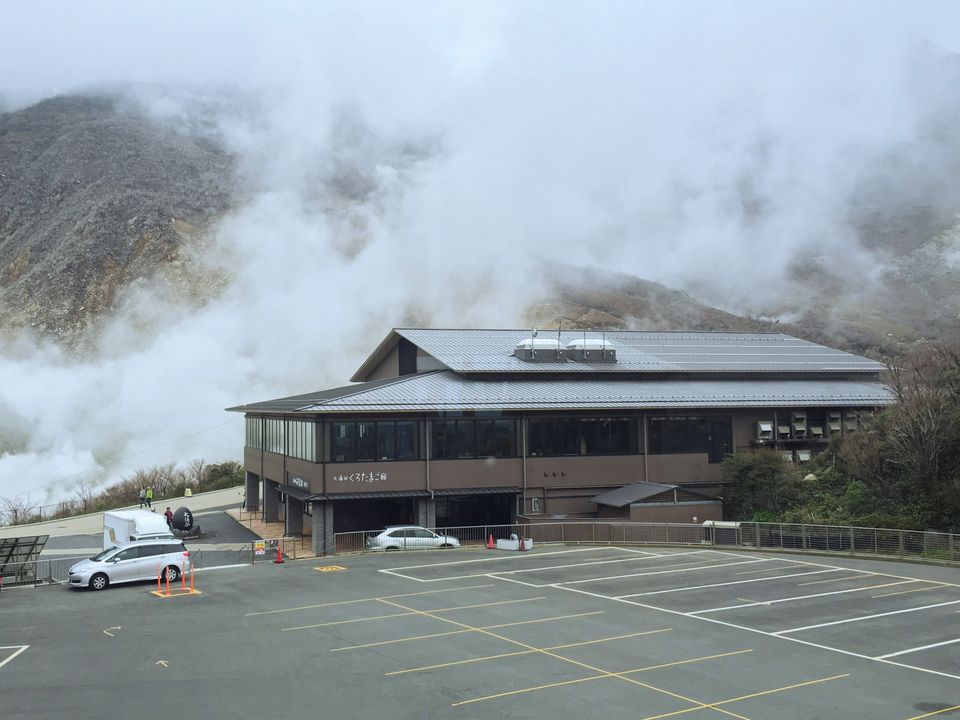
The eggs are boiled in a pool where the water hovers around 80°C, then steamed at 100°C in wooden boxes—a two-stage process that blackens the shell with iron sulfide. Each net bag comes with a pinch of pink volcanic salt mined nearby. The shop also stocks bottled spring water, sweet-potato ice-cream, and a small selection of geology books in Japanese.
sits in a grove of cryptomeria above the lake's eastern shore, its stone steps slick with moss even in summer. The main hall is handsome but unremarkable; what stops everyone is the vermilion torii standing shin-deep in , framing the water and—if the weather holds—Fuji's perfect triangle beyond. Weekday mornings before nine the gate is almost yours; by eleven tour groups have claimed every angle and you're elbowing for a clear shot. The shrine dates to 757, rebuilt a dozen times; the floating torii was added in 1952, yet it's become the postcard.
From the shrine precinct a five-minute walk downhill brings you to the Moto-Hakone pier, where the replicas—gilded figureheads, absurd fake cannon—chug back and forth across the lake. The forty-minute cruise to Tōgendai is pure kitsch on the surface and pure pragmatism underneath: it's the fastest link in the Hakone loop, and the open upper deck gives you an unbroken scan of the caldera rim. On the return leg the boat swings close enough to the torii that you can see the barnacles crusting its lower beams.

The shrine's annual festival on August 1 features a fleet of illuminated boats crossing the lake at dusk, torches reflected in the black water. The main deity is Ninigi-no-mikoto, grandson of the sun goddess Amaterasu; samurai warlords made offerings here before heading into battle. Behind the main hall, a smaller sub-shrine honours the dragon god said to dwell beneath Lake Ashi.

The lake formed roughly three thousand years ago when a volcanic eruption dammed the Hayakawa river; its deepest point reaches forty-three metres. Water temperature stays cold year-round—around 10–15°C—so swimming is rare and wetsuits essential. Fishermen target trout and bass from rental rowboats, especially off the quieter northern shore near Kojiri.
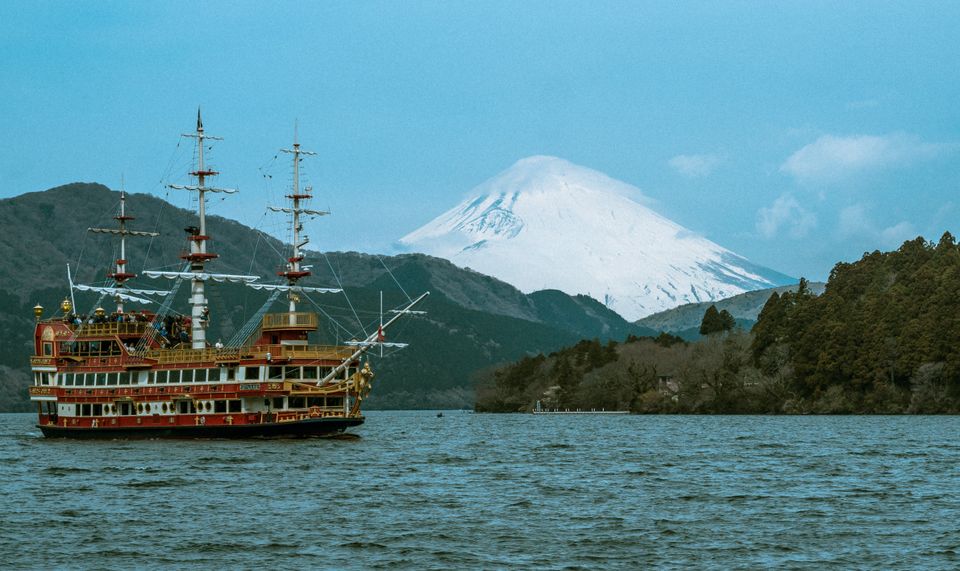
Three ships ply the route: the Royal II (launched 2007), the Victory (2013), and the Queen Ashinoko (2019), each modelled after a different era of European naval design. The Queen Ashinoko's stern gallery is panelled in faux-Baroque gilt; the forward observation deck is all 21st-century glass. Bilingual announcements point out landmarks, but most passengers ignore them in favour of their cameras.
sprawls across a hillside above Gōra, seventy-odd sculptures dotted among azaleas and Japanese maples. Henry Moore bronzes share the lawn with a Miró, a monumental Rodin, and a stained-glass tower you can climb inside. The Picasso Pavilion holds three hundred ceramics, prints, and paintings in a building designed to feel like flipping through a private collection; the contrast between the sun-drenched sculpture garden and the pavilion's cool galleries is deliberate, and it works. At the exit, a footbath fed by the local hot spring lets you soak your feet while you look back over the grounds—a small grace note that reminds you you're still in onsen country.
, twenty minutes downhill by bus, strips away the museum gloss. The changing-room smells of hinoki wood and damp stone; outside, a dozen pools step down a forested slope, each fed by a different source and each a shade warmer or cooler than the last. One basin sits directly under a man-made waterfall—a shoulder massage that borders on punishment. There are no lake views, no English signage, and no tattoo prohibition enforced with any real conviction. Weekday afternoons the clientele skews local and older; you soak, rinse, soak again, then sit on the edge of the highest pool while the forest canopy filters the light into something green and ancient.

The museum opened in 1969, Japan's first dedicated sculpture park, and the permanent collection has grown to include over one hundred works by artists from thirty countries. Seasonal plantings—tulips in spring, hydrangeas in June—frame the sculptures deliberately. The on-site restaurant serves French-Japanese fusion; the terrace overlooks a reflecting pool and a massive stabile by Alexander Calder.
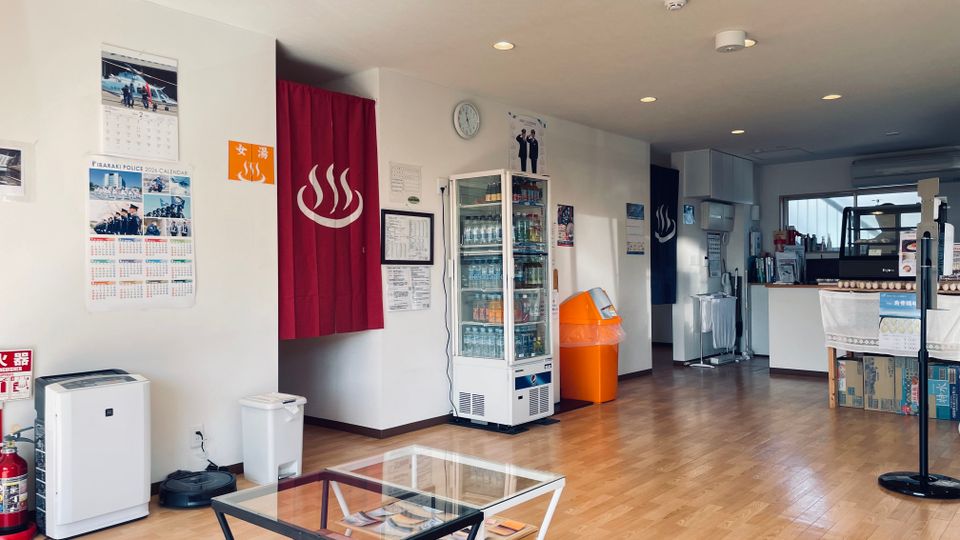
Tenzan has been family-run since 1951, and the stone-lined pools date back nearly as far. The water emerges at 57°C and is cooled by open air and distance as it flows downhill; each basin is a few degrees different. Tattoos are officially discouraged but rarely questioned. A small restaurant on-site serves simple donburi and cold beer; most people eat after soaking, not before.
The Hakone Open-Air Museum sprawls across a hillside above Gōra, seventy-odd sculptures dotted among azaleas and Japanese maples.
is the gateway, the transport knot where the Odakyū line from Tokyo ends and the mountain railway begins. The village clings to the banks of the Hayakawa, and the main shopping street—souvenir shops selling yosegi parquetry boxes and black-egg keychains—funnels everyone toward the station plaza. sits one block back, up a narrow staircase: a soba house where the noodles are cut by hand each morning and served cold on lacquer trays with a dipping sauce of dashi, mirin, and soy. The tempura set adds fat rounds of sweet potato and shiso leaf, crunchy enough to shatter. It's a lunch that takes fifteen minutes, costs under ¥2,000, and sends you back into the crowds ready to tackle the next switchback.
West of Yumoto the climbs through cedar forest so tall the midday sun barely reaches the trail. This is the same route that linked Kyoto to Edo under the Tokugawa shoguns, and a two-kilometre stretch between Moto-Hakone and Hatajuku survives almost intact—stone pavement grooved by centuries of sandal traffic, cobbles slick with leaf-rot. The at the eastern end lines up four hundred trees, some of them planted in 1618; their trunks are thick enough that three people linking hands can't encircle them. In autumn the path is a tunnel of shadow and the only sound is your own footsteps and the occasional crack of a branch overhead.

The Hakone-Yumoto Ekimae shopping street runs two hundred metres along the river, lined with shops selling kamaboko fish-cakes, yosegi marquetry, and green-tea soft-serve. The Hayakawa tumbles over a small weir just below the main bridge; in summer the sound of the water cuts through the crowd noise. A handful of public footbaths dot the riverside walkway, free to use if you bring your own towel.
Hatsuhana has occupied the same wooden building since 1934, and the upstairs dining room overlooks a narrow slice of the Hayakawa. The soba flour is stone-milled daily; noodles are cut to order and served within minutes. The house speciality is yamakake soba—cold noodles topped with grated mountain yam, slippery and faintly sweet. No reservations; expect a short queue at lunch.

The Tōkaidō was one of five highways radiating from Edo, and Hakone-juku was the tenth of fifty-three post-stations immortalised in Hiroshige's woodblock prints. The stone-paved section between Moto-Hakone and Hatajuku climbs roughly 160 vertical metres through forest; it's the longest intact stretch of the original route still walkable today. Wayside shrines and moss-covered jizō statues mark rest-stops where porters once caught their breath.

The avenue was planted in 1618 on the orders of the Tokugawa shogunate to provide shade for travellers on the Tōkaidō road. Of the original 420 trees, around 400 survive; each trunk is tagged and monitored. The largest specimens measure more than five metres in circumference. In typhoon season the forestry service props weakened giants with wooden crutches to prevent collapse.
Average temperatures, crowds and recommended windows — at a glance, month by month.
Climate data based on JMA averages 1991–2020 for Hakone area
Cherry blossoms crown the lakeshore in early April, azaleas blaze across the Open-Air Museum's hillside by May, and the ropeway swings over valleys still patched with late snow—clear skies and Fuji sightings peak before the June rains roll in.
Rainy season blurs June into a string of grey mornings and wet stone paths; July and August bring heat, humidity, and the year's thickest crowds—but the forested trails stay cool, the lake stays cold, and evening onsen feel like earned relief after a day dodging tour groups.
Maples ignite across the caldera from mid-October through November, the Tōkaidō cedars turn bronze at the edges, and the crisp air makes Fuji visible three days out of five—this is peak season for a reason, and the crowds reflect it.
Frost silvers the volcanic slopes, snow dusts the higher peaks, and the onsen pools steam harder in the cold—fewer visitors mean shorter queues and quiet trails, though Fuji hides more often and some outdoor sculpture gardens feel stark without foliage.
Hakone's table leans heavily on two things: soba noodles made with mountain water, and the novelty of cooking with volcanic heat. You'll find elegant kaiseki in ryokan dining-rooms and hand-cut noodles in century-old shopfronts, but the true signature is simpler—black eggs boiled in sulfur springs, eaten warm on a windy ridge.
Cold buckwheat noodles crowned with grated mountain yam, slippery and faintly sweet, served in a second-floor room overlooking the Hayakawa. The noodles are cut to order; the yam turns the dipping sauce creamy. Pair it with tempura if you're hungry—fat rounds of sweet potato, shiso leaf, shrimp.
Chicken eggs boiled in the valley's sulfur hot springs until the shells turn coal-black and the whites take on a pale grey tinge. Sold five to a net bag, still warm, with a pinch of pink volcanic salt. Folklore promises seven extra years per egg; what you get is a mild mineral funk and a story.
Seasonal parade of small plates—sashimi, grilled fish, simmered vegetables, steamed rice—each course timed to the last. The dining-room faces a mossy garden; the sake list runs to twenty labels. Expect two hours, ten courses, and a bill that reflects the precision.
Slabs of firm tofu breaded, fried golden, then simmered in a sweet soy-and-onion sauce until the crust softens and the sauce soaks through. Served over rice in a lacquer bowl, with pickles and miso soup. Comfort food that sticks to your ribs and costs less than a museum ticket.
Slurping soba noodles is not just accepted—it's expected, a way of aerating the buckwheat and showing appreciation. If you're sharing onsen-boiled eggs, peel them over the paper bag to catch the shell fragments; littering is the fastest way to draw a frown.
Our engine builds your days hour by hour, based on your actual dates.
Build my trip →The breakdown by category below — each range still depends on your choices.
Half-board ryokan rates include dinner and breakfast; budget €40–70 for additional snacks, black eggs, and café stops.
Budget €40–60 total for two museum entries plus one onsen visit.
Sold at Odakyū stations in Tokyo (Shinjuku is the main hub), it covers the round-trip Romance Car upgrade, all loop transport (train, bus, ropeway, boat), and discounts at museums—trying to buy individual tickets wastes time and money.
The mountain hides behind cloud and haze by midday most of the year; your best shot at a clear view is before 9 a.m., especially in winter and late autumn.
Gas levels are monitored constantly, and the ropeway will skip the station or shut down entirely if readings climb—check the official Hakone Ropeway website the morning of your visit.
Many public baths still prohibit visible tattoos; Tenzan is relaxed, but hotel onsen policies vary—if in doubt, book a private bath or ask at reception before undressing.
Most visitors go clockwise (train to Gōra, cable-car to Sōunzan, ropeway to Tōgendai, boat to Moto-Hakone, bus back to Yumoto)—fighting the flow means longer waits and fuller carriages.
Major museums and hotels take cards, but the soba joint, the egg vendor, and the kamaboko stall expect yen—carry enough to cover meals and snacks.
One full day covers the core loop—ropeway, Owakudani, lake cruise, shrine, and one museum—but you'll be moving briskly and skipping the deeper trails and onsen soaks. Two days lets you slow down, explore the Tōkaidō road, try multiple hot springs, and have dinner at a ryokan without feeling rushed.
Yes, on clear days Fuji dominates the southern horizon from Lake Ashi, Owakudani, and the ropeway. Your best odds are early morning (before 9 a.m.) in winter, late autumn, and early spring; summer is the worst season for visibility, with haze and cloud blocking the view most days.
No, you can buy it on the day at any Odakyū station, but booking online or buying it the day before in Shinjuku saves queuing time and lets you catch an earlier Romance Car—especially useful on weekends and holidays when trains fill fast.
Yes, with caveats. The onsen are glorious in the rain, the museums are all indoors, and the forest trails turn moody and atmospheric. You'll miss Fuji, the ropeway views lose drama, and the lake cruise feels less magical, but Hakone's volcanic character—steam, stone, hot water—holds up in any weather.
Yes, coin lockers line the station concourse in three sizes (small to large), and they're heavily used—arrive before 10 a.m. on busy days to claim one, or use the staffed luggage-forwarding service to send bags directly to your ryokan or next hotel.
Curated places, an itinerary optimized around your dates — endlessly editable.

