
Culture & Landmarks
Musée commémoratif de l'industrie et de la technologie Toyota

Nagoya doesn't court tourists—it builds maglev trains, presses Lexus bodies, and grills unagi over binchotan charcoal while the rest of Japan looks elsewhere. Between the gilded sliding doors of Honmaru Palace and the 35 locomotives lined up inside the SCMaglev Park, this is a city that never mistook heritage for nostalgia or industry for ugliness.
Nagoya deserves 2–3 days according to Lamaglide's analysis of 73 verified places with measured visit durations. Top sights include Honmaru Palace, Atsuta Houraiken, and Atsuta Jingu.
The moment you step through the torii at , the city falls away—not metaphorically, but acoustically. The 1,900-year-old shrine sits beneath a canopy of hinoki cypress so dense that traffic noise from Route 1 dies within ten paces. One of the three sacred imperial regalia, the sword Kusanagi-no-Tsurugi, rests somewhere inside the inner sanctum; you won't see it, but every Japanese schoolchild knows it's here, and that knowledge thickens the air.
After the gravel crunch of the approach, walk five minutes south to 's Matsuzakaya branch. The hitsumabushi—grilled eel over rice, served in a wooden ohitsu tub—arrives with a three-step ritual: eat the first third plain, the second with nori and wasabi, the third drowned in dashi broth. The eel is torched twice, so the skin shatters like burnt sugar. It's the city's signature dish, born here in Meiji 6 (1873), and no other region does it this way.
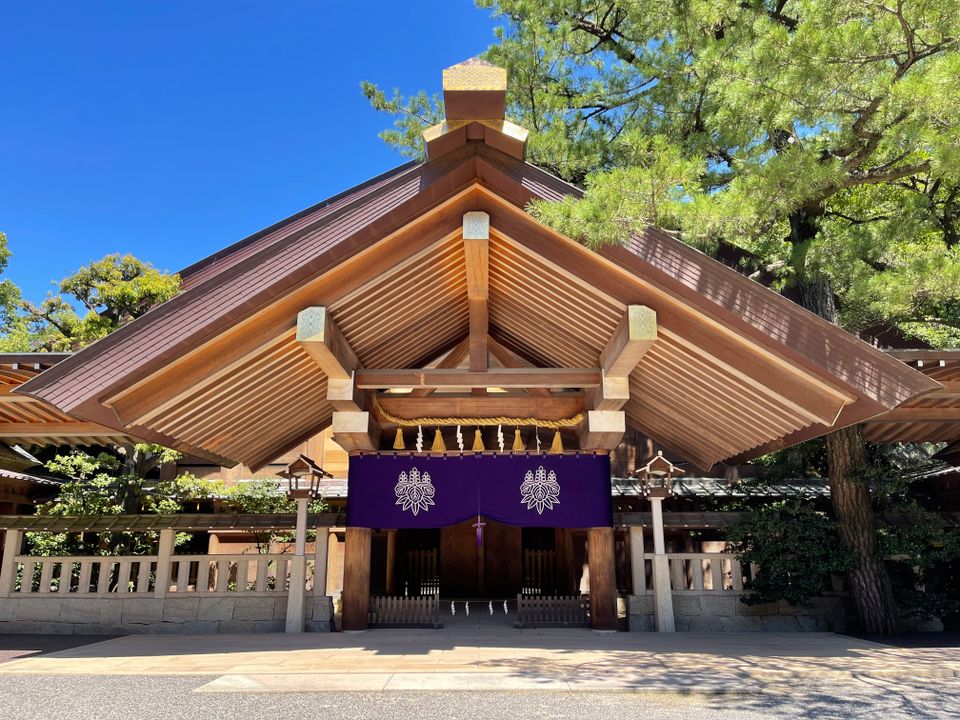
The shrine grounds stretch across 190,000 square meters of ancient forest, with over 60 smaller sub-shrines scattered among the trees. On New Year's Day alone, more than 2.3 million people visit to pray for the year ahead—it's the second-most-visited shrine in Japan after Meiji Jingū. The treasure hall, rebuilt in 2013, holds 6,000 cultural properties including swords, scrolls, and Noh masks donated by emperors and shoguns over the centuries.
Houraiken opened in 1873 near Atsuta Shrine, and this Matsuzakaya branch sits inside the department store's restaurant floor—less atmospheric than the original, but no reservation required and the kitchen uses the same tare recipe. The eel comes from trusted suppliers in Aichi and Shizuoka, grilled over binchotan charcoal in two stages: first to cook through, then a second sear for the shattered-skin crispness. Lunch sets start around ¥3,500; expect a 15-minute wait on weekends.
's twin golden shachihoko—mythical dolphin-tiger hybrids—glint from the roof ridge 48 meters up, each one cast with 88 kilograms of gold scales. The Americans incinerated the 1612 donjon in May 1945; what stands now is a 1959 concrete replica. But inside , reconstructed between 2009 and 2018, every sliding door, every paulownia transom, every tiger painted on gold leaf by the Kano school has been re-created using Edo-period techniques and timber from the same Kiso Valley forests that supplied the original. Stand in the Jorakuden audience chamber and you're looking at 2,289 sheets of gold leaf applied by hand.
The palace smells faintly of fresh hinoki. Craftsmen used no nails—only traditional joints and natural glues. In the corner of one room, a discreet monitor loops footage of the restoration: old men planing cypress beams, painters grinding mineral pigments with water and nikawa glue. It's a quiet reminder that heritage here isn't a relic; it's a renewable contract.
.jpg?width=960)
The current donjon is a 1959 ferro-concrete reconstruction—earthquake-safe but no longer accessible inside due to seismic concerns; the city plans a full wooden rebuild using traditional joinery, projected for completion around 2030. The two golden shachihoko on the roof were recast in 1959 using 88 kg of gold each, and during the Edo period they were considered so valuable that they were a constant target for thieves. The castle grounds cover 23 hectares, with stone walls up to 20 meters high and an original moat still fed by the Shonai River.
Honmaru_palace_hdsr_S5_09.jpg?width=960)
Every nail, every hinge, every pigment in Honmaru Palace was recreated using Edo-period methods: cypress from Kiso, gold leaf from Kanazawa, natural mineral paints ground by hand. The project took nine years and cost over ¥15 billion yen, but the result is so faithful that historians use it as a three-dimensional research archive. The Jorakuden (audience chamber) alone required 2,289 sheets of gold leaf, applied in overlapping layers to replicate the glow of candlelight. You walk through in slippers; guards monitor every room to ensure no one touches the lacquer or leans on the sliding doors.
The occupies a former railyard by the harbor, and inside, 35 full-size trains sit in chronological order like a timeline you can walk beneath. The star is the MLX01-1, the experimental maglev that hit 581 km/h in 2003—its nose cone is longer than a city bus, its undercarriage studded with superconducting magnets. You can climb into a Series 0 Shinkansen cab from 1964, twist the brass throttle, and feel how much heavier everything was before computers.
Two floors up, the simulators let you drive the Tokaido line in real time; miss a brake point and the system scolds you in Japanese. The whole museum sits on land owned by JR Central, the company that runs the future Chuo Shinkansen maglev line to Tokyo. By 2027—now delayed, but still coming—the journey will take 40 minutes. Nagoya isn't preserving trains; it's rehearsing the next century.

The museum is run by JR Central and functions as both public education and corporate showroom: the maglev you see is the same technology that will power the Chuo Shinkansen to Tokyo (still delayed, now targeting the late 2020s). Thirty-nine vehicles fill the main hall, from an 1874 British-built steam loco to the Series N700 Shinkansen you can sit inside. The second floor has driving simulators where you pilot the Tokaido line in real time; miss a signal or brake too hard and the system flags your errors in Japanese. English signage is decent, but the real experience is tactile—climbing into cabs, spinning brass wheels, feeling the heft of analog controls.
The SCMaglev and Railway Park occupies a former railyard by the harbor, and inside, 35 full-size trains sit in chronological order like a timeline you can walk beneath.
, a vermilion temple rebuilt in 1612 and again after the war, sits at the north end of —1.7 kilometers of covered arcade where Buddhist incense mixes with frying takoyaki and the bass from a vintage clothing shop. On the 18th and 28th of each month, an antique market fills the temple courtyard; locals come for Meiji-era ceramics and Showa-era vinyl. The temple library holds over 15,000 texts, including a hand-copied Kojiki from the Kamakura period; it's rarely shown, but knowing it's there adds weight to the souvenir stalls outside.
Three blocks south, slip down a side alley to find Komeda's Coffee—not the one in the arcade, but the basement original from 1968, with red vinyl booths and a menu of morning sets (toast, egg, coffee for around ¥500) that hasn't changed in fifty years. Order the ogura toast: thick-cut white bread, butter, and adzuki bean paste that tastes like what would happen if a pancake married a dorayaki. It's open from 7 a.m., and by 7:40 every seat is taken by retirees reading the Chunichi Shimbun.
_VLux5_hdsr_d03.jpg?width=960)
The temple was originally built in 1333 in Gifu Prefecture, then relocated to Nagoya in 1612 by Tokugawa Ieyasu; the current structure dates from 1970 after wartime bombing. Its library, the Shinpukuji Bunko, holds more than 15,000 classical Japanese and Chinese texts, including a hand-copied Kojiki from the late Kamakura period—it's rarely exhibited, but scholars come from across Japan to study here. The temple hosts antique markets on the 18th and 28th of every month; locals arrive at dawn to hunt Meiji-era pottery, Showa-era cameras, and vintage kimono fabric.
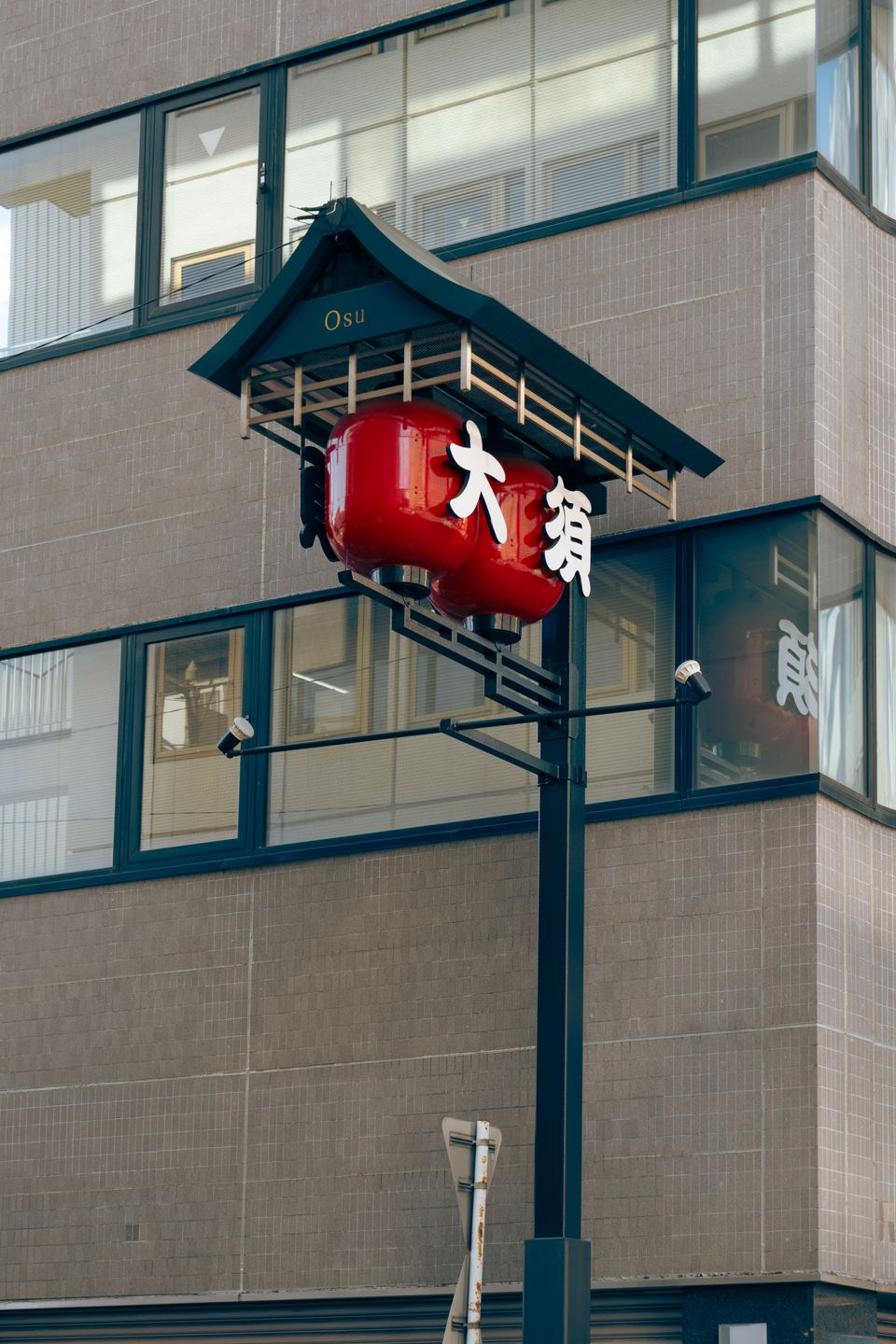
Osu Shotengai stretches for 1,700 meters under a covered arcade, with over 1,200 shops, cafés, and restaurants packed into the grid of streets around Ōsu Kannon temple. It started as a temple town in the Edo period and reinvented itself every generation: postwar black markets, 1980s electronics bazaars, 1990s cosplay mecca, and now a mix of vintage fashion, maid cafés, Brazilian grocery stores, and third-wave coffee roasters. On weekends it's shoulder-to-shoulder; weekday mornings you can walk the whole length in 20 minutes and have your pick of kissaten booths.
Average temperatures, crowds and recommended windows — at a glance, month by month.
Climate normals 1991–2020, Japan Meteorological Agency
Cherry blossoms explode across Tsuruma Park and Meijō Park in late March—peak hanami falls around April 1st—and the weather hovers in the low 20s°C, warm enough for shirtsleeves but cool enough that the subway doesn't smell like salary-man sweat.
June is the rainy season—tsuyu—and by mid-July the humidity tops 80%, turning every walk into a personal sauna; locals flee to air-conditioned malls or the Canal Resort's cold baths, and by August the only tourists left are the ones who booked Ghibli Park tickets six months ago.
October brings the city back to life: temperatures drop to the high teens, the ginkgo trees along Hisaya-Ōdori turn violent yellow by mid-November, and the autumn matsuri at Atsuta-jingū fills the gravel paths with food stalls selling yaki-imo and amazake.
Winter is dry and bright—December averages 6°C, January dips to 4°C—and while snow is rare in the city, the cold keeps the crowds thin; New Year at Atsuta-jingū draws over two million visitors in three days, but by mid-January the temple is yours again.
Nagoya cooking is unsubtle and unapologetic—miso the color of wet earth, eel torched until the skin cracks, pork cutlets thick as your wrist. It's the opposite of Kyoto restraint, and locals defend it with the fervor of a hometown baseball fan.
Grilled eel sliced over rice in a hinoki ohitsu, eaten three ways: plain, with condiments, then drowned in hot dashi. The eel skin shatters like caramel; the rice underneath soaks up every drop of tare.
A palm-thick loin, panéed and fried, then smothered in a sauce of Haccho miso, sugar, and dashi. It's sweet, salty, and aggressively brown. Yabaton's been doing it since 1947.
Sumiyoshi's stand sells hot miso-nikomi udon through a window on the northbound platform. You need a ¥160 platform ticket to enter, but the noodles—thick, chewy, floating in red miso broth—are worth the bureaucracy.
Sushi Hijikata hides in a nondescript building; reservations open 60 days out and vanish in minutes. The chef serves whatever came in that morning from Toyosu, and every piece is blowtorched, brushed, or salted into something unrepeatable.
When eating hitsumabushi, divide the rice into four quadrants with your paddle before you start—it's the traditional method and ensures you don't run out of eel halfway through the dashi pour.
Our engine builds your days hour by hour, based on your actual dates.
Build my trip →The breakdown by category below — each range still depends on your choices.
2-night stay: €100–280 (budget) to €360–500 (upscale)
2 days, 2 people, 6 meals total: €140–280 (mix of casual and mid-range)
2 days, 2 people: €40–80 (airport return + unlimited subway passes)
2 people, 3–4 sites: €60–120
Tickets go on sale the 10th of each month for entry two months later—book at 2 p.m. JST sharp or face resale markups; weekdays have better availability than weekends.
Many smaller restaurants, temple donation boxes, and even some museum ticket counters accept cash only—carry ¥10,000 in small bills; 7-Eleven ATMs take foreign cards and charge no Nagoya-specific fee.
Nagoya Station's coin lockers (¥300–700) are full by 10 a.m. on weekends; book luggage storage at Ecbo Cloak partner shops (around ¥600/day) or use your hotel's service even after checkout.
The Tokugawa Art Museum, Toyota Commemorative Museum, and City Art Museum all close Mondays (or the next day if Monday is a holiday)—check before you plan your route.
You'll remove your shoes and walk in socks or provided slippers; the tatami and hinoki floors are immaculate, and guards will stop you if your bag touches the ground.
Nagoya's subway has six color-coded lines; the Higashiyama (yellow) line connects the station to Sakae and Higashiyama Zoo, and announcements include English—but transfer tunnels can stretch 400 meters.
One day covers the castle, Honmaru Palace, and a quick hitsumabushi lunch, but you'll miss the SCMaglev Park, Atsuta-jingū, and any real sense of the city's neighborhoods. Two to three days let you absorb the industrial heritage, eat properly, and take a half-day at Ghibli Park if you're a Studio Ghibli fan.
Yes, if you care about trains, Toyota history, reconstructed Edo architecture, or eating eel three different ways in one bowl. No, if you want geisha districts, canals, or postcard scenery—Nagoya is proudly industrial and unsentimental, and it rewards curiosity over checklist tourism.
Maglev trains, Toyota's birthplace, Nagoya Castle's golden shachihoko, hitsumabushi (grilled eel on rice), and miso-everything cuisine—misokatsu, miso-nikomi udon, miso dengaku. It's also the birthplace of pachinko and home to the most-visited Shinto shrine outside Ise.
The castle to Sakae is about 3 km and walkable in 35 minutes, but the subway is faster, cleaner, and runs every 4–6 minutes; most visitors walk within neighborhoods (Osu, Sakae, the port) and ride the subway between them.
No, but it helps. Subway signs, ticket machines, and major museums offer English; restaurant menus often don't, though plastic food displays make pointing easy. Learning 'sumimasen' (excuse me) and 'arigatou gozaimasu' (thank you) opens doors—literally, in some small shops.
Curated places, an itinerary optimized around your dates — endlessly editable.
VLux5_hdsr_o33.jpg?width=960)
