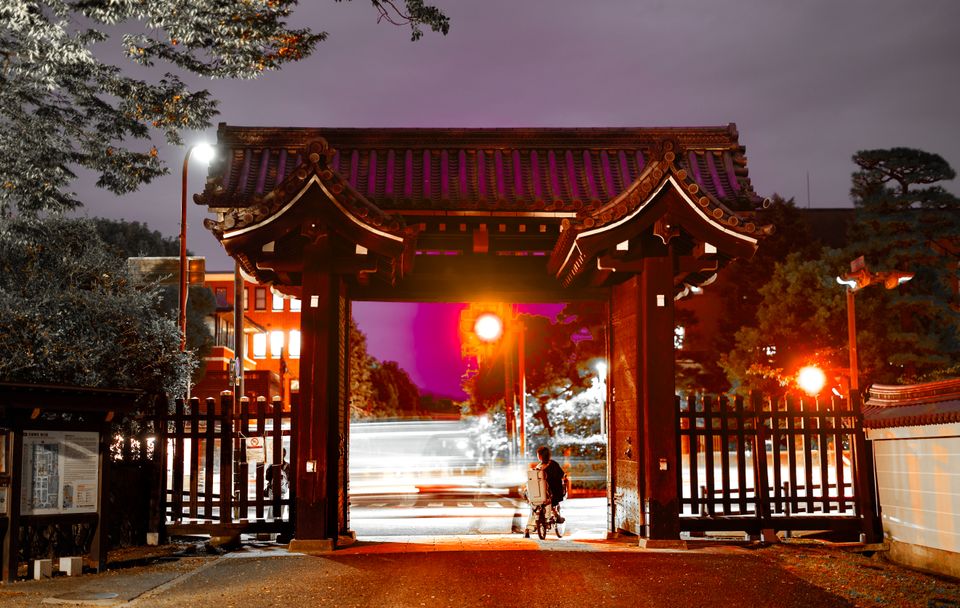
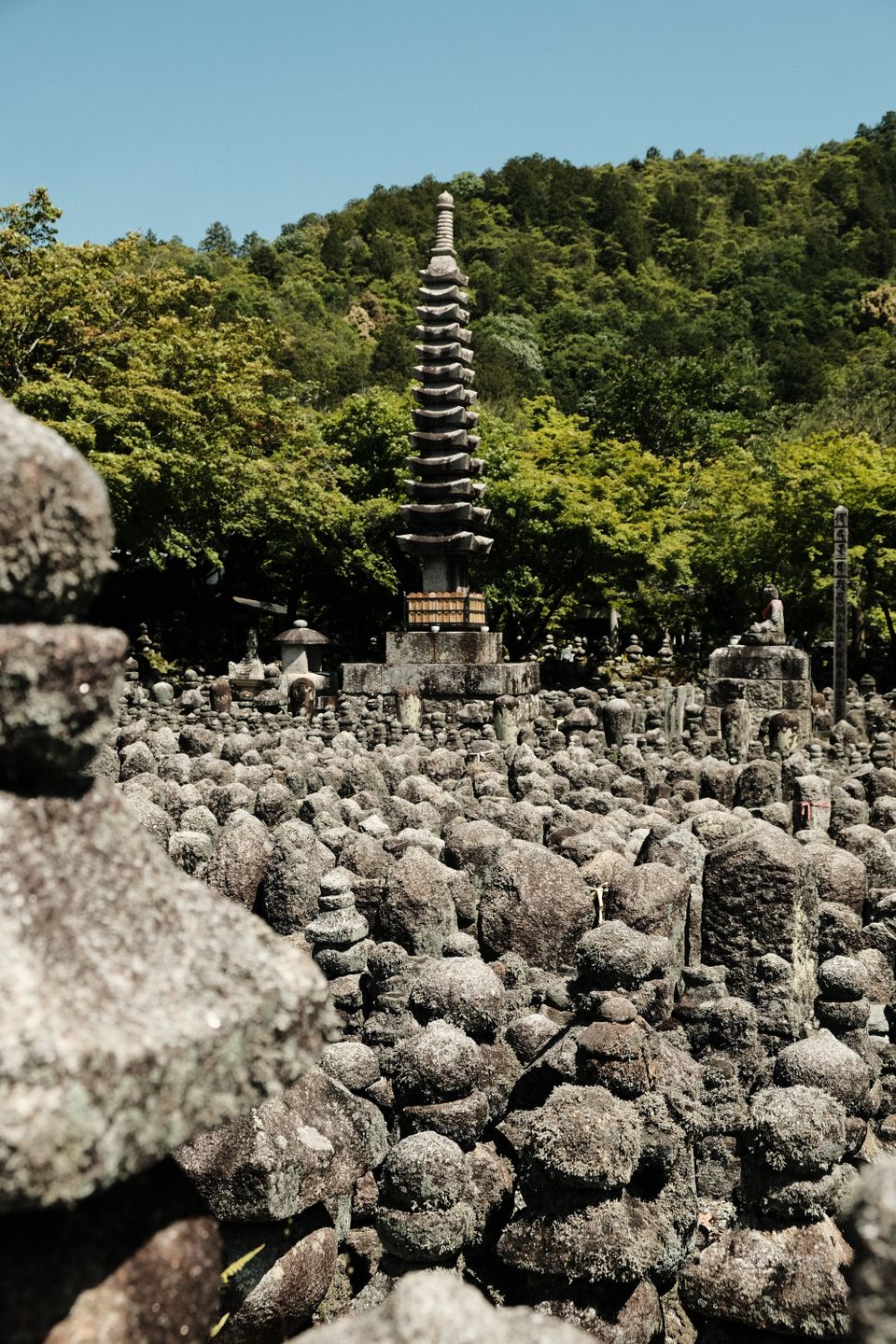
Perched at 800 meters in the cedar forests of Wakayama, Kōyasan is the headquarters of Shingon Buddhism—a living monastery town where 117 temples still house monks, and where overnight guests sleep on tatami, wake to gongs at 6 a.m., and join morning prayers lit by ten thousand bronze lanterns.
Ideal length1–2 days
Best seasonMay–June, September–November
Budget / day€90–150 per person
Airport → centerTrain + cable car + bus from Osaka (Namba), ~2h15
Getting aroundOn foot—the entire town spans 3 km
Mount Kōya deserves 1–2 days according to Lamaglide's analysis of 13 verified places with measured visit durations. Top sights include Ichinohashi Bridge, Kongobu-ji Danjo Garan (Elevated Precinct), and Okuno-in Cemetery.
One night among the sutras
01The northern approach
Through the vermillion gate, into the fog
You arrive at Kōyasan through , a two-story crimson structure rebuilt in 1705, flanked by wooden guardian deities whose scowls have softened under centuries of rain. In early morning or late afternoon, cloud spills through the gate's frame like smoke through a chimney, erasing the valley below and leaving only the smell of wet cypress and the rhythmic clack of your shoes on stone.
From the gate, a straight road runs east through the town center, lined with shukubo—temple lodgings that take guests. Each temple garden hides behind a white wall; a single wooden placard announces the name. There are no neon signs, no traffic lights. By 6 p.m. in winter, the streets are silent except for the echo of temple bells and the hiss of a kettle in a monk's quarters.
Walk fifteen minutes and you reach , the original temple complex founded by Kūkai in 816. The Konpon Daitō—a 49-meter pagoda painted in cinnabar lacquer—rises above the pines, visible from almost every corner of town. Inside, murals of Mahavairocana and the four Buddhas of wisdom glow under dim lamps; the air smells of incense and old wood. Outside, stone lanterns mark the perimeter, and in autumn, ginkgo leaves carpet the gravel in sheets of yellow.
Preview
Daimon Gate
The current gate dates to 1705, replacing earlier versions destroyed by fire. Its two-story structure is supported by massive unpainted pillars, and the guardian statues—Niō figures carved in the 17th century—stand in open bays on either side, exposed to wind and rain. In heavy fog, the gate appears to float above the valley, disconnected from the mountain.
Why we love it
✓The view westward through the gate's frame at sunset, when the valley below fills with cloud and the last light catches the vermillion beams
✓The silence at dawn, broken only by the creak of the wooden structure settling and the distant call of a crow
What we sometimes hear
~It's a 15-minute uphill walk from the bus stop, and in summer heat or winter ice it can feel long—but the gate is the traditional entry to Kōyasan, and arriving through it (rather than from the east) sets the tone for everything that follows.
The complex sprawls across several hectares of gravel courtyards linked by stone paths. The Konpon Daitō pagoda, rebuilt in 1937 after a fire, is painted in brilliant red lacquer that looks almost new; inside, the central pillar is surrounded by sixteen smaller pillars, each painted with a different Buddha. The Kondō (Golden Hall) next door houses a seated Yakushi Nyorai flanked by guardian deities, but it's often closed for restoration.
Why we love it
✓The contrast between the cinnabar pagoda and the pale November sky, especially when ginkgo leaves cover the ground in a thick yellow mat
✓The quiet in the early morning before tour groups arrive—you can hear the rustle of monk's robes and the scratch of a broom on gravel
What we sometimes hear
~The site can feel a bit scattered, with multiple buildings and unclear signage—but a simple loop (pagoda, main hall, bell tower, then exit south) takes about an hour and covers the highlights.
Daimon Gate
02The heart of Shingon
Kongōbu-ji and the garden of two seas
, ten minutes' walk north of the pagoda, is the administrative head temple of Shingon Buddhism—a title it has held since 1593. The main hall's sliding doors are painted with cranes on pine, executed in the Kanō school style; the Willow Room (Yanagi-no-Ma) is where the daimyō Toyotomi Hidetsugu committed seppuku in 1595, and the ceiling panels still bear faint stains.
Behind the hall stretches the Banryū-tei rock garden, designed in 1984 but evoking older models: 140 granite boulders arranged to suggest a pair of dragons emerging from a sea of white gravel. The garden is raked each dawn; at 7:30 a.m., when the ticket office opens, the lines are still fresh. Visitors circle the veranda in socks, shoes left at the entrance, while a recorded sutra hums faintly from the interior chambers.
From Kongōbu-ji, narrow lanes thread west through residential temple precincts—wooden gates, moss-covered stones, hand-lettered signs advertising shojin-ryori (Buddhist vegetarian cuisine). In late afternoon, the smell of sesame oil and simmering kombu drifts from temple kitchens, and you hear the chop of knives on cutting boards, the distant chime of a handbell calling monks to evening service.
Preview
Kongobu-ji
The temple's main hall is a sprawling wooden structure with tatami corridors that creak underfoot. The Willow Room, site of Hidetsugu's death, is roped off but visible; the painted willows on the sliding doors are attributed to Kanō Tanyū. In the kitchen, visible through a glass partition, sit two enormous iron cauldrons used historically to prepare meals for thousands of pilgrims during festivals.
Why we love it
✓The Banryū-tei rock garden, best viewed from the south veranda in afternoon light when shadows sharpen the contours of the boulders
✓The free tea service offered in a side room after the tour—green tea and a small sweet, served on lacquer trays
What we sometimes hear
~Entry is ¥1,000, which feels steep for a 30-minute visit—but the garden alone justifies it, and the temple is the symbolic and administrative heart of Shingon Buddhism, so the fee supports active religious infrastructure.
The approach to begins at , a covered wooden span over a stream that marks the boundary between the profane and the sacred. Monks and pilgrims bow before crossing. Beyond the bridge, a paved path runs arrow-straight through a forest of cryptomeria—some trunks five meters in diameter, bark furred with moss—flanked by more than 200,000 stone monuments, wooden stupas, and company memorials erected over twelve centuries.
Walk slowly: the graves belong to shoguns, daimyō, monks, and modern corporations (there is a rocket-shaped monument funded by a space-technology firm, and another sponsored by an insecticide company, carved with praying mantises). Moss grows thick on everything. In the half-light under the canopy, the only sounds are the trickle of stone basins, the snap of twigs, and the murmur of sutra from lone pilgrims in white robes.
At the far end, you cross —a short, sacred span where photography is forbidden and where pilgrims bow three times. Beyond it lies , the Lantern Hall, a low wooden building whose interior is stacked floor to ceiling with bronze and stone lanterns, more than 10,000 in all, donated by families over centuries. Two flame urns have burned continuously since 1023. The hall smells of candle wax and old silk. Behind it, through a final gate, is the mausoleum of Kūkai himself—alive, it is said, in eternal meditation, awaiting the future Buddha.
Preview
Okuno-in Cemetery
The path from Ichinohashi Bridge to the mausoleum is exactly 2 kilometers, paved but uneven in places, and lit at night by stone lanterns. Many graves are centuries old, their inscriptions worn smooth; others are brand-new, including memorials for aborted fetuses, pets, and even termites (erected by a pest-control company). The forest is so dense that even at midday, the light is dim and green.
Why we love it
✓Walking the path at dusk or early morning when tour groups are absent and the only sounds are birdsong and the trickle of water over stone basins
✓The layered textures—lichen on granite, moss on wood, ferns growing from cracks in old monuments
What we sometimes hear
~The full walk takes 45–60 minutes each way, and it can feel repetitive if you're not interested in funerary architecture—but most visitors find the atmosphere meditative, and you can turn back early or start from the closer eastern entrance (Okunoin-mae bus stop) if time is short.
The sacred First Bridge marking the entrance to Okuno-in, where a solemn atmosphere immediately embraces visitors as they step onto the ancient stone-paved path.
15min
Preview
Gobyo-bashi bridge
The bridge is a simple wooden span, perhaps ten meters long, with low railings and no roof. A sign in Japanese and English asks visitors to bow before crossing. On the far side, a pair of stone lanterns marks the boundary of the innermost precinct, and a monk in white robes often sits nearby, chanting sutras from a small booklet.
Why we love it
✓The act of bowing before crossing—it's a small ritual, but it shifts your mindset from sightseeing to pilgrimage
✓The view upstream, where moss-covered stones and overhanging maples frame a narrow ravine
What we sometimes hear
~Some visitors skip the bow or take selfies on the bridge, which draws disapproving looks from pilgrims—but if you follow the etiquette, the moment feels genuinely sacred, and it's one of the few places on the mountain where the boundary between observer and participant dissolves.
The hall is narrow and smoky, its interior dominated by rows of hanging bronze lanterns that clink softly when the door opens. The two eternal flames, called the Shōrō-tō and the Muen-tō, have been maintained by monks in unbroken succession since the 11th century. Pilgrims leave written prayers and small offerings of coins in wooden boxes near the entrance.
Why we love it
✓The sheer density of lanterns—some polished, some blackened with soot, all swaying slightly in the draft—and the way their collective glow turns the smoke into visible ribbons
✓The quiet reverence inside, even when crowded; people speak in whispers or not at all
What we sometimes hear
~Photography is prohibited inside and beyond Gobyo-bashi bridge, which frustrates some visitors—but the rule preserves the sanctity of the site, and honestly, the experience is more powerful without a camera between you and the space.
Okuno-in Cemetery
“
The approach to Okuno-in Cemetery begins at Ichinohashi Bridge, a covered wooden span over a stream that marks the boundary between the profane and the sacred.
The story — Okuno-in path
04Temple lodging
Sleeping on tatami, waking to gongs
Staying overnight in a shukubo is the reason most visitors come. At , check-in is at 3 p.m.; you remove your shoes at the genkan, and a monk in gray robes shows you to a tatami room furnished with a low table, a scroll, and a vase holding a single branch. Futons are laid out at 8 p.m. The shared bath is cypress-wood, filled with near-scalding water, and overlooks a small courtyard garden lit by a single stone lantern.
Dinner is served at 6 p.m. in a communal hall: shojin-ryori on black lacquer trays—sesame tofu, pickled mountain vegetables, miso soup with yuzu, sticky rice, and a small dish of konnyaku sashimi. Every ingredient is local or preserved; no meat, no fish, no garlic. The meal is silent except for the clink of chopsticks and the scrape of ceramic.
Morning prayers begin at 6 a.m. Guests are invited to sit on the tatami at the back of the main hall while monks chant the Heart Sutra, punctuated by gongs, drums, and the rattle of wooden clappers. Incense smoke drifts through the dim hall, and the chanting builds in layers—deep bass, mid-range drone, high nasal intonation—until the final gong at 6:45. Breakfast follows: rice porridge, pickles, nori, and green tea. By 8 a.m., you are back on the street, the town still half-asleep, mist rising from the temple roofs.
Preview
Eko-in Temple (Pilgrim's Lodging)
Eko-in is one of the larger and more accessible shukubo, with about 30 guest rooms and English-speaking staff. The temple conducts a fire ritual (goma) at 6 a.m. that guests can attend; monks toss wooden sticks inscribed with prayers into a small bonfire while chanting rhythmically. The temple is a 5-minute walk from Okunoin Cemetery, making it a convenient base.
Why we love it
✓The morning goma ceremony—the heat of the fire, the smell of burning cedar, the hypnotic drumbeat and chanting
✓The quiet simplicity of the rooms: futon, tatami, low table, and a scroll alcove (tokonoma) with seasonal flowers
What we sometimes hear
~The walls are thin, and you'll hear neighbors moving around or snoring—but that's true of almost all shukubo, and the trade-off is an authentic temple-stay experience, including vegetarian meals and morning prayers, at around ¥10,000–12,000 per person with two meals.
Eko-in Temple (Pilgrim's Lodging)
When to go
Every season, a different face
Average temperatures, crowds and recommended windows — at a glance, month by month.
Jan2°
Feb2°
Mar5°
Apr11°
May16°
Jun19°
Jul23°
Aug24°
Sep20°
Oct14°
Nov9°
Dec4°
Jan2°
Feb2°
Mar5°
Apr11°
May16°
Jun19°
Jul23°
Aug24°
Sep20°
Oct14°
Nov9°
Dec4°
Best window
Best window
Recommended monthLow crowdsHighPeak seasonAverage temperature
Climate data based on Japan Meteorological Agency normals (1991–2020) for Kōyasan (elevation ~800 m)
Spring (March–May)
Good
Cherry blossoms arrive late here—early May, not April—and the mountain is still cool enough at night that temple rooms need extra blankets; morning mist clings to the cryptomeria, and the forest floor is carpeted with white trillium and purple violets.
Summer (June–August)
Mixed
July brings rain and humidity; the cemetery path turns slippery with moss, and the air in the Lantern Hall feels thick and smoky—but August afternoons are pleasantly cool at 800 meters, and the evening gongs ring out over a chorus of cicadas louder than anywhere else in Kansai.
Autumn (September–November)
Best
October and early November are peak for momiji (maple) color, and the ginkgo at Danjōgaran turns a yellow so bright it looks artificial; the air is crisp, the skies clear, and the number of pilgrims triples, so book temple lodging two months ahead.
Winter (December–February)
Good
Snow falls here regularly from December through February, muffling sound and turning the cemetery into a monochrome scroll painting; the town empties of tourists, temple baths feel twice as hot, and the monks' morning chants echo in the cold air like glass bells.
Food & drink
What to eat here
Kōyasan has no standalone restaurants in the conventional sense—dining here revolves around shojin-ryori, the Buddhist vegetarian cuisine served at temple lodgings. The meal is part of the pilgrimage: seasonal, local, and free of the five pungent roots (garlic, onion, leek, chive, shallot). A few small cafés near the bus terminal offer noodles and sweets for day visitors, but the real table is the low lacquer tray in your temple room at 6 p.m.
At temple meals, wait for the monk or host to signal before eating—usually a small bow or the word 'itadakimasu.' Eat everything on your tray; leaving food is considered wasteful and disrespectful. If you're staying overnight, breakfast and dinner are included, served at set times (typically 6 p.m. and 7 a.m.), and you eat in your room or in a communal hall depending on the temple.
Itinerary
Want it all planned out?
Our engine builds your days hour by hour, based on your actual dates.
The 2-kilometer Okuno-in path is stroller-friendly (paved, mostly flat), though the cemetery's atmosphere is solemn and may not hold young children's attention for the full walk.
Temple lodgings welcome families, but rooms are traditional (futons on tatami, shared baths) and meals are vegetarian; some temples offer private baths or Western-style rooms if booked ahead.
Morning prayers start at 6 a.m., which is early for kids, but most temples allow families to attend partially or skip without issue.
Winter snow transforms the town into a quiet, fairy-tale landscape, but temperatures drop near freezing and temple heating is minimal—bring layers.
No playgrounds or child-specific attractions; Kōyasan is a contemplative destination best suited for children 8+ who can appreciate the ritual and quiet.
Solo
Solo travelers are common here—many are pilgrims walking the Shikoku 88-temple route or simply seeking a retreat—so there's no awkwardness dining or staying alone.
Temple lodgings assign solo guests to single rooms (or occasionally shared rooms in peak season, but this is rare); the atmosphere is respectful and quiet, ideal for solo reflection.
The town is exceptionally safe at night; streets are nearly empty after 7 p.m., lit by stone lanterns and the glow of temple windows, and crime is unheard of.
Walking the cemetery path alone at dusk or dawn is meditative rather than eerie—other pilgrims nod in greeting, and monks occasionally pass in silence.
English is limited outside the larger temples (Eko-in, Kongōbu-ji), but signage is decent, and solo navigation is straightforward—everything is walkable and well-marked.
Accessibility
The journey from Osaka requires a cable car (steep, no steps inside) and a bus (step-up entry, no wheelchair lift); the infrastructure is aging and not designed for mobility impairment.
Most temple interiors require shoe removal and have step-up entrances (20–30 cm); Kongōbu-ji and Danjōgaran have some wheelchair-accessible paths, but rooms with tatami and sliding doors are not accessible.
Okuno-in's 2 km path is paved but uneven in places, with a gentle incline; the eastern half (from Okunoin-mae bus stop) is shorter and flatter if stamina or mobility is limited.
Temple lodgings involve sleeping on futons laid on tatami (no beds), bathing in communal or shared tubs (step-over entry), and sitting on the floor for meals—difficult for those with joint or mobility issues.
Public restrooms are available near the bus terminal and at major sites, some with accessible stalls, but many temple facilities are squat-style.
Total budget
€340–500
For two people over 1 night
The breakdown by category below — each range still depends on your choices.
Accommodation
per night (2 persons)
Shukubo (temple lodging) with 2 meals€100–140 per person
Higher-end temple (private bath, larger room)€140–180 per person
One night for 2 persons: €200–280 total, including kaiseki-style vegetarian dinner and breakfast.
Food
per person, per meal
Temple meals (included in lodging)—
Café lunch or snack (day visitors)€8–15
If staying overnight, breakfast and dinner are included; budget €10–15 for a simple noodle lunch if arriving early or departing late.
Transport
round trip per person
Osaka (Namba) ↔ Kōyasan (train + cable car + bus)€40–50
On-site (entirely walkable)€0
Return transport for 2 persons: €80–100. A 2-day Kansai Thru Pass (€40) covers the route and is good value if combining with Osaka or Nara.
Activities
per person
Kongōbu-ji entry€6
Danjōgaran (Konpon Daitō + Kondō)€4–5
Reihokan Museum€5
Typical entry fees for 2 persons: €30–40. Okuno-in Cemetery and most temple exteriors are free.
Good to know
What we wish we'd known
Temple lodging books out fast
Reserve shukubo at least 4–6 weeks ahead for autumn (October–November) and 2–3 weeks for other seasons; many temples use Japanese booking platforms (Shukubo Association site has English), and some require phone confirmation.
Last bus up is around 7 p.m.
If day-tripping, check return schedules carefully—the final cable car down is typically around 9 p.m., but buses from Kōyasan to the cable-car station stop earlier, especially in winter; missing it means an expensive taxi or an unplanned overnight.
No ATMs after hours
The single ATM near the bus terminal closes at 6 p.m.; most temples and the few shops accept cash only, so withdraw yen in Osaka or at Gokurakubashi station before heading up the mountain.
Dress for 5–8°C cooler than Osaka
At 800 meters elevation, Kōyasan is noticeably colder year-round; even in August, bring a light jacket for evening, and in winter, expect snow and near-freezing temperatures inside unheated temple corridors.
Temple meals are strictly vegetarian
Shojin-ryori contains no meat, fish, dairy, or pungent roots (garlic, onion); if you have food allergies or strong dietary restrictions, communicate in advance—some temples can accommodate gluten-free or nut allergies, but options are limited.
Photography bans are taken seriously
No photos inside Torodo Hall, beyond Gobyo-bashi bridge, or inside most temple main halls; monks and pilgrims will ask you to stop if they see a camera out, and ignoring the rule is considered deeply disrespectful.
Frequently asked
Before you go
Is one day enough for Kōyasan?+
Yes, if you stay overnight in a temple lodging—you'll experience morning prayers, walk Okuno-in Cemetery, visit Danjōgaran and Kongōbu-ji, and eat shojin-ryori, which covers the core of what makes Kōyasan meaningful. A rushed day trip (up in the morning, down by evening) is possible but skips the temple-stay experience, which is the soul of the visit. Two days allows a slower pace and time for the museum or outer temples, but most visitors find one night sufficient.
Can I visit Kōyasan as a day trip from Osaka?+
Yes—the journey is about 2 hours 15 minutes each way (train, cable car, bus), so you can arrive by 10 a.m. and leave by 5 p.m., giving you time for Okuno-in, Danjōgaran, and Kongōbu-ji. However, you'll miss morning prayers, temple meals, and the quiet evening atmosphere, which are the main reasons people come. Day-tripping is logistically feasible but spiritually incomplete.
Is Kōyasan too touristy?+
It sees crowds in autumn (October–November) and during Japanese holidays, especially around Danjōgaran and the Lantern Hall, but Okuno-in Cemetery remains meditative even in peak season due to its length and the dispersal of visitors. The town itself is still a functioning monastic center—monks vastly outnumber tourists in winter and spring—and the atmosphere is reverent, not commercial. Early morning and late afternoon are consistently quiet year-round.
Do I need to be Buddhist to stay in a temple?+
No—shukubo welcome guests of all backgrounds (or none), and participation in prayers is invited but never required. The experience is cultural and contemplative rather than evangelical. That said, basic respect for the setting is expected: quiet after 9 p.m., no shoes indoors, no alcohol, and modest behavior in shared spaces.
What should I wear to Kōyasan?+
Dress modestly and practically: shoulders covered, no short shorts, and comfortable walking shoes (you'll walk 3–5 km easily). Temple interiors require shoe removal, so slip-ons are convenient. Layers are essential—temple rooms are unheated, and mornings are cold even in summer. In winter, bring a warm jacket, gloves, and a hat; snow is common and the town is 5–8°C colder than Osaka.
Ready to go?
Build my trip to Mount Kōya — free
Curated places, an itinerary optimized around your dates — endlessly editable.