Culture & Landmarks
Arc de Triomphe

Paris reveals itself in the angle of zinc rooftops catching the 8 a.m. light over rue de Rivoli, in the crackle of baguette crust still warm from the 6 a.m. batch, in the particular green of iron chairs ringing the Luxembourg fountain. The city's 20 arrondissements spiral outward from the Seine like a stone thrown into water, each ripple holding a different century, a different Paris.
Paris deserves 4 days according to Lamaglide's analysis of 261 verified places with measured visit durations. Top sights include Basilique du Sacré-Cœur de Montmartre, Sainte-Chapelle, and Seine.
The sits on the Montagne Sainte-Geneviève like a Roman oath carved into the 5th arrondissement. Its neoclassical dome—272 feet to the lantern—anchors the , where rue Soufflot drops straight down toward the gardens. Inside, the pendulum still swings beneath Foucault's 1851 experiment, tracing the Earth's rotation in slow arcs above the crypt where Voltaire, Rousseau, and Marie Curie lie beneath identical stone slabs. The temperature drops five degrees as you descend; the silence is abbey-thick.
Two blocks west, the Jardin du Luxembourg unfolds in 56 acres of gravel paths and clipped chestnuts. Parisians claim their green iron chairs by 10 a.m. on weekends, angling them toward sun or shade with the precision of sundial makers. Children in wool coats push wooden sailboats across the octagonal basin with long sticks, a ritual unchanged since the 1920s. The park's beehives—tucked behind the orchard on the western edge—produce honey sold each September at the on-site shop, labeled by arrondissement.
Walk north along and the cafés thicken: gilt mirrors, cane chairs, waiters in long aprons carrying trays one-handed. has held the corner of rue Saint-Benoît since 1887, its red banquettes worn smooth by decades of writers nursing petit noirs until closing. Sartre took the same table each afternoon in the 1940s; today tourists and regulars share the same€ 5.50 espresso, the same view of the boulevard's plane trees shedding bark in summer.
.jpg?width=960)
The dome's interior frescoes—commissioned in the 1870s and 1880s—depict scenes from French history in murals that wrap the drum like a stone comic strip. The crypt's layout is egalitarian: no hierarchy, just identical stone markers, though some (Voltaire, Hugo) draw more flower-laying visitors than others. Free entry first Sunday of the month, November–March.

The name comes from the Latin students spoke here until the Revolution: the Latin Quarter has revolved around the Sorbonne (founded 1257) and the Collège de France since the 12th century. Its medieval lanes—rue Galande, rue de la Bûcherie—tumble toward the Seine past bookshops, arthouse cinemas, and lecture halls.

The orchard's 700 apple and pear trees—planted in the 17th century, replanted over the years—supply fruit for the park's small-scale jam production, sold at the annual honey-and-harvest festival each September. Free outdoor concerts run July and August on the bandstand; classical, jazz, and folk acts at 4:30 p.m. on weekends.

The boulevard was cut through medieval streets in the 1850s and '60s as part of Haussmann's redesign, widening the rive gauche to match the Right Bank's grand axes. Today it runs nearly 2 miles from Pont de Sully to Pont de la Concorde, threading bookstores (La Hune closed 2015, but Taschen and Assouline remain), antique dealers, and the odd surviving butcher still displaying whole rabbits in the window.

The interior layout hasn't changed since the 1950s: red banquettes, mahogany woodwork, globe lights, mirrors that double the room's perceived size. The café awards its own annual literary prize (Prix de Flore, founded 1994) each November, €6,000 and a year's worth of white wine—previous winners include Michel Houellebecq and Christine Angot.
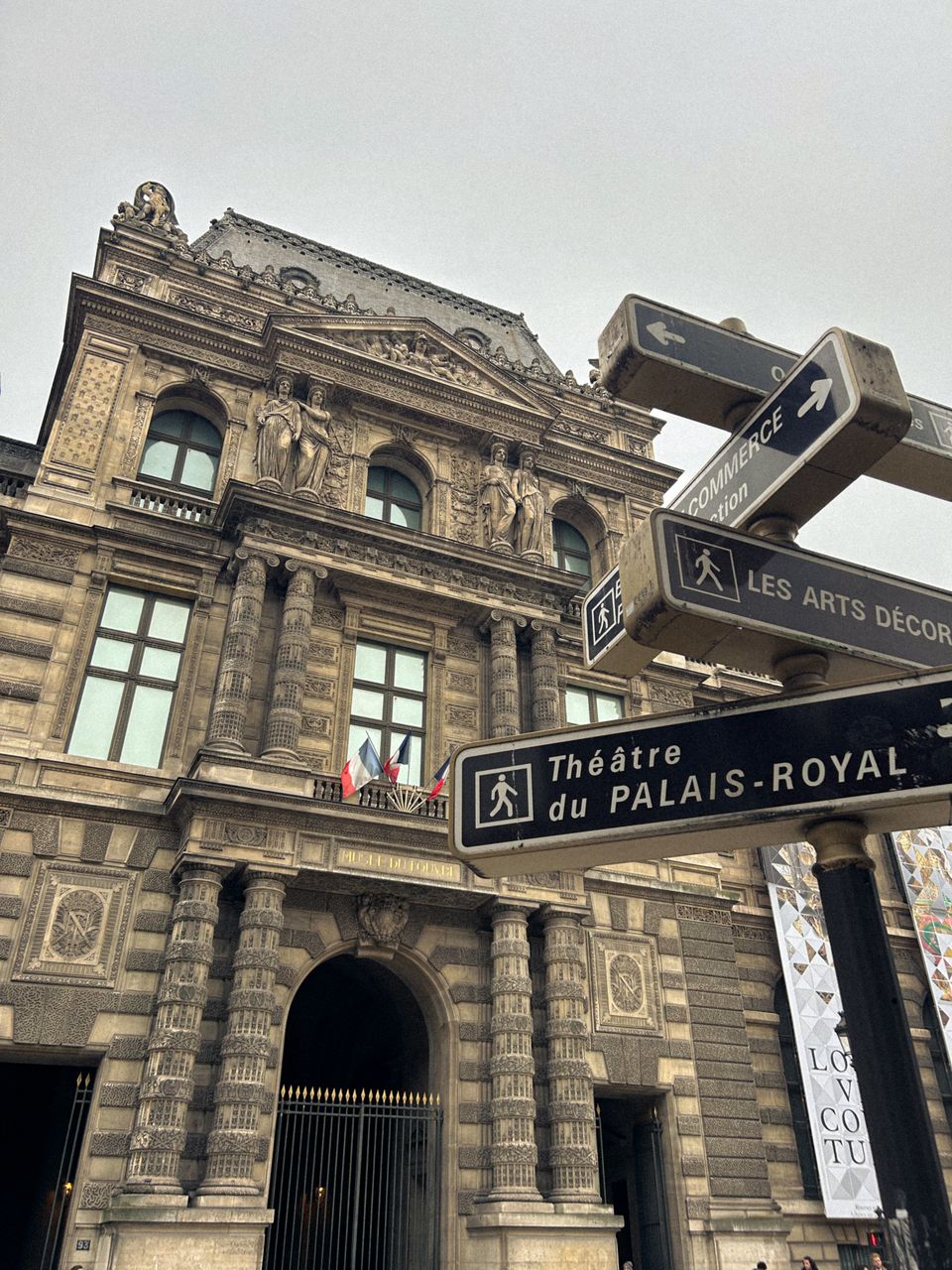
The breaks the Cour Napoléon's symmetry like a glass theorem—675 panes rising 71 feet, designed by I. M. Pei and opened in 1989 to howls of protest that have since faded into affection. It funnels 30,000 visitors a day into the , the world's largest, where the Mona Lisa sits behind bulletproof glass in the Salle des États, and the Winged Victory of Samothrace commands the Daru staircase as she has since 1866. Arrive when doors open at 9 a.m. Wednesday or Friday to walk the Grande Galerie before the tour groups thicken; the parquet creaks underfoot, the same oak planks laid in the 1850s.
Across the Seine, the occupies the old Gare d'Orsay, a Beaux-Arts train station saved from demolition in 1977 and reborn as a museum in 1986. Its central nave—450 feet long, topped with an iron-and-glass barrel vault—still feels like a waiting hall, but now the tracks hold Rodin bronzes and the platforms display Courbet. The fifth floor is where most people go: room after room of Monet, Renoir, Degas, the Impressionists who painted along this very stretch of river. The giant station clock—gilt hands, Roman numerals—frames a view through its glass face onto and Sacré-Cœur across the rooftops.
The was meant to stand for 20 years, a temporary iron exclamation point for the 1889 World's Fair. Gustave Eiffel's 18,038 metal pieces, held by 2.5 million rivets, still rise 1,083 feet over the . Skip the elevator queues and climb the 674 steps to the second level; your thighs will complain but the view is clearer, the ironwork intimate. At night, the tower's 20,000 bulbs sparkle for five minutes on the hour—a light show added in 1985 that locals claim to ignore but always glance up to catch.

Pei's design sparked protests in the 1980s—critics called it a 'scar,' a 'desecration'—but the pyramid solved a real problem: the museum's old entrances couldn't handle 5 million annual visitors. Today it processes 10 million, funneling crowds underground into a 160,000-square-foot reception hall that didn't exist before 1989. The three smaller pyramids flanking it are purely aesthetic, echoing the main form.

The palace's medieval foundations—visible in the basement's Louvre médiéval exhibit—show the original fortress built by Philippe Auguste in the 1190s, with moat remnants and defensive walls you can walk alongside. The museum's eight curatorial departments span 60,000 square meters; even sprinting, you'd need three days to glance at every room.

The station's original iron framework—Victor Laloux, 1900—was nearly demolished in the 1970s until President Pompidou intervened; the museum opened in 1986, its collection drawn largely from the Louvre's overstuffed 19th-century stores. The rooftop café (fifth floor, behind the giant clock) serves quiche and salads at museum-café prices, but the view through the clock face onto Montmartre is lunch-ticket enough.

The neighborhood's artistic heyday—Picasso, Toulouse-Lautrec, Utrillo—ran roughly 1890–1920, when rents were cheap and the butte sat outside city limits, exempt from Paris taxes on wine. The Bateau-Lavoir (place Émile-Goudeau), Picasso's 1908 studio, burned in 1970 but was rebuilt; a plaque marks where Les Demoiselles d'Avignon was painted. Today the artists in Place du Tertre churn out portraits for €30–50, more souvenir than art, but the setting—cobbles, accordion music, plane trees—still plays its part.

The iron oxidizes to a reddish-brown naturally; the tower is repainted every seven years in 'Eiffel Tower Brown,' a custom color mixed in three shades (darker at the base, lighter at the top) to counteract atmospheric perspective. Eiffel's private apartment on the top floor—where he entertained Thomas Edison in 1889—was recently restored and can be glimpsed through windows on the summit visit.

The gardens were laid out in 1908 after serving as parade grounds (hence 'Champ de Mars,' Field of Mars) and fairgrounds for the 1889 and 1900 Expositions. Today the lawns host impromptu soccer, picnics, and—on Bastille Day (July 14)—a massive fireworks display launched from the tower itself, drawing 500,000 spectators.
Montmartre's butte rises 430 feet above sea level, the highest point in the city, and every one of those feet is earned via staircases: the 300-plus steps from Abbesses métro, the tight spirals of rue Foyatier, the ivy-draped shortcuts locals know by heart. At the summit, the spreads its white travertine domes—consecrated in 1919 after 40 years of construction—across a terrace that tilts all of Paris into view. Inside, the apse mosaic of Christ in gold tesserae covers 4,800 square feet; the crypt below is all Romanesque shadow and candle wax. Descend west into the tangle of and , where the last vineyard in Paris (Clos Montmartre, 1,000 vines) produces 1,500 half-bottles each October, sold only at auction for charity.
unfurls across the 3rd and 4th arrondissements in a grid of medieval lanes and 17th-century hôtels particuliers, their courtyards hidden behind carriage doors. —commissioned by Henri IV in 1605, finished in 1612—is the city's oldest planned square, 36 red-brick pavilions framing a central garden where children chase pigeons under the linden trees. Victor Hugo lived at number 6 from 1832 to 1848; his apartment is now a museum, free entry, where you can see the desk where he wrote part of Les Misérables. Sunday afternoons, the arcades fill with families eating falafel from rue des Rosiers, the Marais's Jewish quarter one block north, where has held the same corner since 1979.

The basilica's white travertine stone—quarried from Château-Landon, 90 km southeast—secretes calcite when it rains, a natural self-cleaning process that keeps the façade perpetually bright. Construction began in 1875 as a penance monument after France's 1870 defeat; it wasn't consecrated until 1919, after World War I. The crypt, open for visits, holds relics and a spring considered sacred since pre-Christian times.
%2C_2006_(02).jpg?width=960)
The switchback street climbing from place Blanche toward Montmartre's windmills. Van Gogh lived at number 54 with his brother Theo; the Café des Deux Moulins at number 15 is still the one from the film Amélie.

The shopping spine of lower Montmartre, served by one of the last original Art Nouveau métro entrances by Guimard. Off it sits square Jehan-Rictus and its "Wall of I Love You"—612 declarations in 250 languages on enameled lava tiles.

The neighborhood's name ('the marsh') recalls its pre-12th-century wetlands, drained by monks and later developed into aristocratic estates. The Revolution emptied the hôtels particuliers; the 20th century saw waves of Jewish immigration (1880s–1930s from Eastern Europe, 1960s from North Africa), then gay community growth (1980s–90s), then gentrification (2000s–today). Rue des Rosiers still holds kosher bakeries and falafel joints; rue Sainte-Croix-de-la-Bretonnerie is the heart of gay Paris.

Henri IV commissioned the square in 1605 to create a silk-manufacturing district; the original plan included workshops on the ground floor, residences above. The silk plan flopped, but the architecture stuck: 36 pavilions, nine per side, identical save the taller King's Pavilion (south) and Queen's Pavilion (north). Cardinal Richelieu lived at number 21; the square was renamed Place des Vosges in 1800 to honor the Vosges department, first in France to pay its taxes after the Revolution.

Since 1979, the green door on rue des Rosiers has served the Marais's benchmark falafel, in the heart of the old Jewish quarter, the Pletzl. You order at the window and eat standing or on the move.
At the summit, the Sacré-Cœur spreads its white travertine domes—consecrated in 1919 after 40 years of construction—across a terrace that tilts all of Paris into view.
The splits around Île de la Cité like water around a ship's prow, and at the island's heart sits the , its scaffolding-wrapped towers still visible across every river view since the 2019 fire. The stone façade—laid between 1163 and 1345—waits for its reopening, but you can still circle the perimeter, trace the flying buttresses' leap from nave to pier, measure the empty space where the spire stood for 160 years. Walk 200 yards east to find what the flames spared: , built in seven years (1241–1248) to house Louis IX's relics, a Gothic jewel box whose upper chapel dissolves into 15 stained-glass windows—50 feet tall, 1,113 scenes from Genesis to the Apocalypse, color that turns the air blue and crimson when the afternoon sun strikes from the west.
Beyond the islands, the Seine's stone quais—added between the 16th and 19th centuries, UNESCO-listed since 1991—are where Paris walks off dinner. The Right Bank quais from to Pont de l'Alma close to cars on summer Sundays; skaters, cyclists, and joggers claim the cobbles while the bateaux-mouches churn past, their spotlights raking the Louvre's façade. The bouquinistes—green metal book stalls bolted to the parapet walls since the 1850s—sell vintage Tintin, yellowed postcards, and first-edition Simenon to anyone willing to browse in the open air, rain or shine, as Parisians have for 170 years.

The river runs 777 km from Burgundy to the English Channel, but its Paris reach—13 km through the city center, looping past 37 bridges—is the postcard stretch. The quais were added piecemeal from the 16th to 19th centuries to tame flooding and create promenades; today they're UNESCO-listed (since 1991) as a 'riverine urban landscape' that shaped the city's growth. The riverbanks close to cars each summer (Paris Plage, mid-July to late August) and on Sundays year-round between Bastille and the Eiffel Tower.

The cathedral's construction spanned 182 years (1163–1345), with major restorations by Viollet-le-Duc in the 1840s–60s after centuries of neglect and Revolution-era vandalism. The 2019 fire destroyed the 19th-century spire and oak roof (nicknamed 'the forest' for its 1,300 beams, each from a different tree), but the stone vaults largely held. Reopening is projected for December 2024, with the spire rebuilt to Viollet-le-Duc's design using period techniques.

Louis IX (later Saint Louis) paid 135,000 livres for the Passion relics—Christ's crown of thorns, fragments of the True Cross—and another 40,000 to build the chapel to house them, a ratio that says everything about medieval priorities. The relics were moved to Notre-Dame in the Revolution (the crown survived the 2019 fire); what remains is the architecture, a stone-and-glass argument that light is the language of the divine.

Despite the name, it's the oldest bridge in Paris, completed in 1607 under Henri IV. It was the first with no houses on it, introducing sidewalks and the semicircular bastions where you can sit over the river; it spans the downstream tip of the Île de la Cité.
Average temperatures, crowds and recommended windows — at a glance, month by month.
Climate normals 1991–2020, Météo-France
Chestnut trees froth into bloom along the grands boulevards by mid-April, café terraces reopen their full sprawl, and the strawberries at Marché Bastille taste like something worth standing in line for—first of the season, small and sharp and gone by June.
July and August drain the city of Parisians and refill it with visitors; queues at the Louvre snake across the courtyard, the metro cars bake, but the Seine's Right Bank quais become a beach (Paris Plage, mid-July to mid-August) with sand, deck chairs, and pop-up bars where you can drink a €6 demi and watch the sunset at 10 p.m.
September light turns the Tuileries golden, the rentrée (back-to-school, back-to-work) restores the city's rhythm, and by October the bistros are serving game—venison, wild boar, hare—braised in wine until the meat pulls apart with a fork, the kind of dish that justifies a second bottle.
The cold is damp rather than sharp, snow rare but rain frequent; museum crowds thin, hotel rates drop 30–40%, and the windows at Printemps and Galeries Lafayette stage their holiday displays—six stories of animatronics and lights that draw queues around the block through New Year's.
Eating in Paris means understanding that a meal is a negotiation with time—two hours minimum, three courses assumed, and the bread basket refilled without asking. The city's 30,000 restaurants span from zinc-counter bistros where the plat du jour is scrawled on a chalkboard to temples of haute cuisine where reservations open 90 days out and vanish in minutes.
La Tour d'Argent has been pressing duck since 1890, each bird numbered (you're handed a certificate with yours—they passed number 1,000,000 in 2003). The dining room on the 6th floor overlooks Notre-Dame's eastern flank; the sommelier steers you through a 300,000-bottle cellar that survived both world wars. Expect two Michelin stars, a €250–350 tasting menu, and the kind of service where water glasses never fall below half-full.
Tucked into the Pavillon de la Reine on Place des Vosges, this starred table serves Pic's signature berlingots—pasta parcels barely bigger than a thumbprint, filled with seasonal variations (spring: wild garlic and shrimp; autumn: squab and foie gras). The dining room is intimate, maybe 30 covers, the service relaxed enough that you can ask the sommelier to surprise you and mean it. Lunch menus start around €85; dinner climbs past €200.
Café de Flore serves the same petit déjeuner it has since before Camus died: espresso in a white cup, butter in a silver dish, jam in a tiny pot with a spoon too small to be practical. Yes, you're paying €18 for toast and coffee; yes, half the tables are tourists reading Hemingway; yes, it's worth it once to sit where Simone de Beauvoir corrected proofs every Thursday morning in 1949. Go at 8 a.m. before the crowds, claim a table by the window, and watch the boulevard wake up.
Alain Ducasse's table inside the Maison Baccarat pairs haute cuisine with 250 years of crystal craftsmanship—chandeliers overhead, stemware that catches candlelight like prisms, a room that feels like dining inside a jewelry box. The menu changes seasonally but leans heavily on shellfish, white asparagus in spring, game in autumn, and a cheese cart that requires its own waiter. Book a month ahead; tasting menus run €295–395, wine pairings add another €150–200.
Bread goes directly on the tablecloth, never on your plate—it's used to push food onto the fork and to wipe the last of the sauce, a gesture called 'faire la saucette' that's considered a compliment to the chef. And say 'bonjour' when you enter any shop or café; silence reads as rude, not shy.
Our engine builds your days hour by hour, based on your actual dates.
Build my trip →The breakdown by category below — each range still depends on your choices.
Accommodation over 4 nights: 500–1,200 € (2 pers.)
Food over 4 days: 600–1,400 € (2 pers., mix of bistros, cafés, one premium dinner)
Transport over 4 days: 100–180 € (2 pers., passes + occasional taxi)
Activities over 4 days: 200–400 € (2 pers., museum pass + one tour or show)
Both require online timed-entry tickets; walk-up queues at the Louvre can hit 90 minutes in summer, and Sainte-Chapelle's tiny capacity fills fast. Book at least two weeks out in shoulder season, a month in July–August.
The Louvre is closed Tuesday, the Orsay Monday, Versailles Monday; double-check before you plan a Monday museum crawl. Most stay open late one evening a week (Louvre Wednesday and Friday until 9 p.m.).
Lunch service runs noon–2 p.m., dinner 7:30–10 p.m.; arrive outside those windows and you'll be offered drinks only. Bistros and brasseries are more flexible, but Michelin-starred tables enforce their reservation slots.
They work in teams, targeting distracted phone-users and tourists with backpacks. Keep bags zipped and in front of you; if someone bumps you or asks for help, check your pockets immediately.
Many independent shops, neighborhood bistros, and bakeries close for two to four weeks; chain restaurants and tourist-zone cafés stay open, but the Paris you're visiting in August is running on half its usual cast.
Service (15%) is baked into every bill by law; locals leave coins (€1–2) on a café table, round up taxi fare, or add 5–10% at higher-end restaurants if service was excellent, but it's never expected.
Four days lets you cover the Louvre, Orsay, Eiffel Tower, Notre-Dame, Montmartre, and one day-trip (Versailles or Giverny) without sprinting, plus time to linger in a park or over a long lunch. It's enough for a first visit; a second trip will show you the neighborhoods the first one missed.
Mid-range travelers spend €100–150 per person per day (accommodation, food, transport, sights); budget travelers can squeak by on €60–80 with hostels, bakery lunches, and picnics, while luxury pushes past €400/day once you add palace hotels and starred meals. Museum passes (€77 for 4 days) save money if you're visiting more than four museums.
The central arrondissements (1st–7th, plus Marais and Latin Quarter) are entirely walkable—compact, flat, and woven with pedestrian streets and river paths. Montmartre's butte requires stair-climbing stamina, and outer arrondissements are faster by metro. Comfortable shoes are non-negotiable; cobblestones punish sneakers with thin soles.
No, but learning 'bonjour,' 's'il vous plaît,' and 'merci' shifts interactions from transactional to warm; Parisians appreciate the effort. English is widely spoken in hotels, museums, and tourist-zone restaurants, less so in neighborhood bakeries and markets, where pointing and smiling close most gaps.
Central Paris (1st–8th, Marais, Latin Quarter, Saint-Germain) is well-lit and busy until late, with a strong police and tourist presence. The northern 18th (Barbès, Gare du Nord surroundings), parts of the 19th and 20th, and isolated metro stations feel sketchier after dark—trust your gut, stay on main streets, and take a taxi if uncertain. Pickpocketing is the main risk, far more common than violent crime.
Curated places, an itinerary optimized around your dates — endlessly editable.


.jpg?width=960)