
Entertainment
Tokyo Disneyland

Tokyo arranges 14 million people on trains that run to the second, serves omakase at 5 a.m. in markets older than most nations, and hides seventh-floor shrines above konbini where salarymen pray before the morning shift. The city doesn't mix past and future—it stacks them in the same footprint, so a single subway stop separates kaiseki counters from teamLab's liquid mirrors.
Tokyo deserves 4 days according to Lamaglide's analysis of 207 verified places with measured visit durations. Top sights include Meiji Jingu, Ueno Park, and Shinjuku Golden-Gai.
Arrive at before 7 a.m. and you'll share the courtyard only with monks raking gravel and a handful of regulars who bow twice, clap twice, bow once—the Shinto sequence performed with the same economy as tying a shoelace. The 's 670-kilogram lantern, repainted every decade since 1960, hangs four meters overhead; locals walk beneath it without looking up. By 8:30 the is unfurling its shutters—ninety stalls in a 250-meter corridor selling senbei stamped with temple crests, wooden combs lacquered in Aizu style, and omamori charms sorted by wish: traffic safety, exam success, safe childbirth.
Fifteen minutes north by foot, spreads 53 hectares of gingko alleys and lotus ponds around five major museums. The anchors the northern edge with 110,000 pieces of Japanese and Asian art; Gallery 2 on the second floor holds the largest collection of ukiyo-e prints in the country, rotated quarterly to protect the pigment. On weekday mornings the 's panda enclosure opens at 9:30 sharp; lines form twenty minutes earlier.
Exit the park's southwest gate and you're on Okachimachi's jewellery arcade, where forty shops sell cultured pearls by the strand and gold findings by weight. The vendors speak Mandarin, Tagalog, and enough English to quote daily London fixes; transactions happen in yen cash, receipts optional.

Founded in 645 AD after two fishermen pulled a golden Kannon statue from the Sumida River, Sensō-ji is Tokyo's oldest temple and still its most visceral. The main hall was rebuilt in 1958 after firebombing leveled the original, but the ritual geometry—purification fountain, incense caldron, offertory box—hasn't budged in centuries. Arrive before 7 a.m. and the only sound is gravel under your shoes and the low thrum of sutra chanting from inside the hall.
%2C_Sensoji_Temple%2C_Akakusa%2C_Tokyo.jpg?width=960)
The Thunder Gate's iconic 700-kilogram lantern is repainted every ten years by artisans from Kyoto; the current one dates to 2013 and carries sponsorship by Panasonic founder Kōnosuke Matsushita, whose name is inked on the lantern's base. The gate marks the threshold between the profane (the street) and the sacred (the temple approach), a Shinto boundary you cross without noticing unless someone tells you. At night the lantern is lit from within, glowing persimmon-orange against the Asakusa skyline.

Nakamise has served pilgrims since the 17th century, when locals were granted the right to set up stalls on the temple approach. Today's ninety shops still pay rent to the temple, selling everything from ¥500 folding fans to ¥8,000 silk kimono accessories. The senbei (rice crackers) are stamped with the temple's crest and grilled over charcoal in front of you; the ningyo-yaki (red-bean-filled cakes) come out of cast-iron molds shaped like pagodas and lanterns.
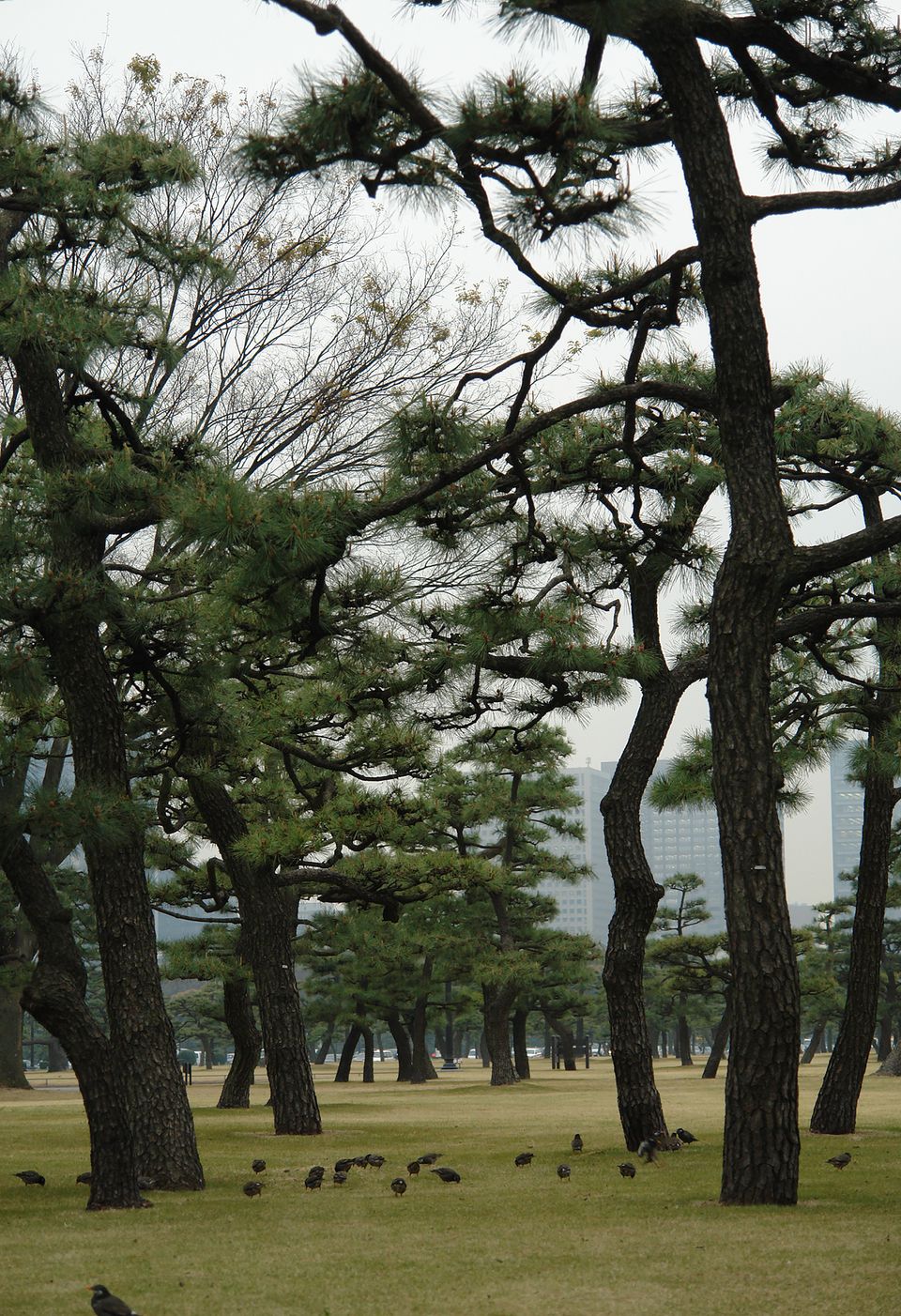
Ueno Park was Japan's first public park, established in 1873 on the grounds of a destroyed Tokugawa temple complex. It's now Tokyo's densest concentration of culture: five major museums, a zoo, a concert hall, Shinobazu Pond with its lotus-covered surface, and 1,200 cherry trees that turn the park into a sake-soaked hanami carnival every April. The Saigo Takamori statue at the south entrance honors the samurai who led the 1877 Satsuma Rebellion; his dog, Tsun, gets his own mini-statue and regular floral tributes.

Founded in 1872, the TNM is Japan's oldest and largest museum, holding 110,000 objects across five buildings. The Honkan (Japanese Gallery) is the heart: two floors of National Treasure-grade scrolls, samurai armor, tea ceremony utensils, and the world's largest ukiyo-e collection. The Heiseikan hosts major temporary exhibitions—past shows have included imperial regalia and excavated Jomon pottery. English audio guides are included with admission; the museum's app lets you bookmark pieces and build a custom tour.
.jpg?width=960)
Japan's oldest zoo, opened in 1882 in the heart of Ueno Park. The giant pandas are the headline act; the rest, split across two sections linked by a bridge, runs from gorillas to sea lions.
reconfigures itself every two minutes: red lights halt eleven lanes of foot traffic, then release up to 3,000 people into a shared intersection where the only rule is don't stop. Film it from the second-floor Starbucks if you want the cliché; live it at street level at 9 p.m. on a Friday when the LED billboards sync to a Samsung ad and every face glows blue for fifteen seconds. , three blocks south, lifts you 229 meters to an open-air deck where the geometry finally resolves—the Yamanote line's arc, the Meguro River's dogleg, the wall of Shinjuku's towers due north.
Two stops up the Yamanote, Harajuku Station disgorges you into 's approach: a gravel path under a 12-meter torii built from 1,500-year-old Taiwanese cypress. The shrine itself, reconstructed in 1958 after Allied incendiary raids, sits in 70 hectares of dedicated forest—120,000 trees donated from across Japan and planted in a succession plan designed to mature over 150 years. On weekends you'll see wedding processions: bride in white shiromuku, groom in black haori, Shinto priest in violet silk, moving in silence except for the crunch of gravel.
Exit through the north gate and opens up: rockabilly dancers on Sundays by the fountain, dog runs under the zelkova trees, and families grilling yakitori on designated stone platforms. The contrast—sacred forest to public commons in 400 meters—is pure Tokyo: land-use zoning as theology.

Shibuya Crossing operates on a 90-second light cycle that halts eleven vehicular lanes and releases foot traffic from eight directions simultaneously, resulting in what traffic engineers call a 'pedestrian scramble.' On peak hours—Friday and Saturday evenings—up to 3,000 people cross in a single cycle. The intersection was rebuilt in 1973 and has been filmed in Lost in Translation, Fast & Furious: Tokyo Drift, and approximately 10,000 Instagram Reels per day. The LED billboards sync occasionally for ad takeovers; when they do, the entire crossing glows a single brand color.
.jpg?width=960)
Shibuya Sky occupies floors 14, 45, and the rooftop of Shibuya Scramble Square, a 229-meter tower that opened in 2019. The transition begins on the 14th floor with an escalator through a mirrored tunnel; the 45th-floor indoor gallery has floor-to-ceiling windows and a digital art installation that responds to weather data. The rooftop 'Sky Stage' is entirely open-air, no glass, just wind and a 360° view: Shinjuku's towers to the northwest, Tokyo Tower to the south, and on clear winter days, Mount Fuji 100 kilometers west.

Meiji-jingū was completed in 1920 to honor Emperor Meiji and Empress Shōken, destroyed in 1945 air raids, and rebuilt in 1958 with donations from across Japan. The surrounding forest—70 hectares, 120,000 trees representing 365 species—was planted entirely by volunteers according to a 150-year succession plan designed to create a self-sustaining ecosystem. The main torii, rebuilt in 1975, is cut from 1,700-year-old Taiwanese cypress and stands 12 meters tall. On New Year's Day the shrine receives over three million visitors, the highest count of any shrine in Japan.
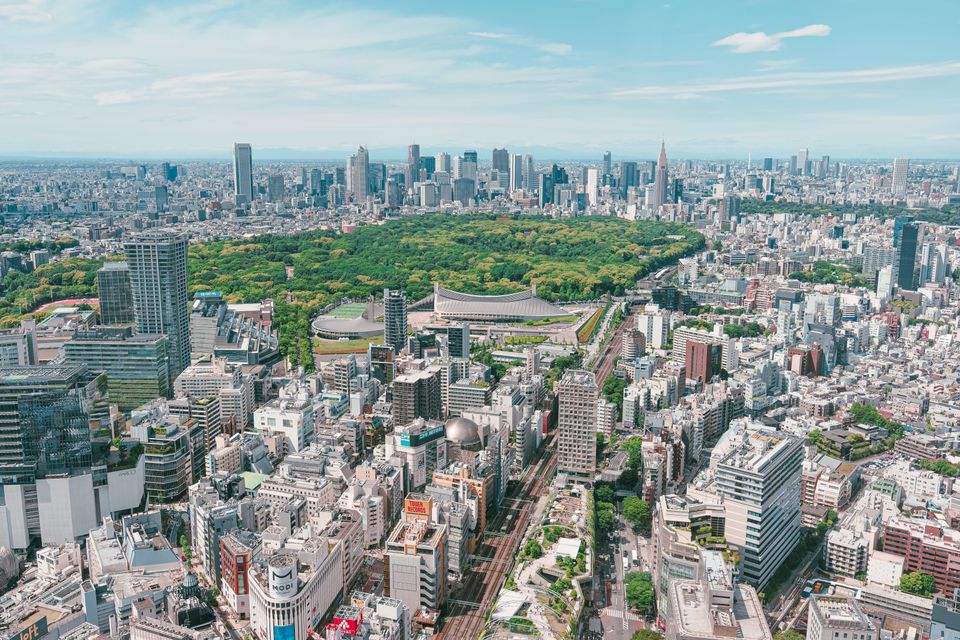
Yoyogi Park occupies 54 hectares that served as the Olympic Village for the 1964 Tokyo Games, then became a public park in 1967. It's Tokyo's widest open space inside the Yamanote loop: families picnic on the central lawn, joggers loop the perimeter road, and on Sundays a rotating cast of subcultures claims territory—rockabilly dancers by the fountain, hula groups under the zelkovas, Brazilian drummers near the Harajuku gate. The park's dog run is one of the few off-leash zones in central Tokyo; the adjacent NHK broadcast center occasionally films outdoor concerts on the main plaza.
survives as six alleys of two-story shanties because the land rights are so fractured no developer can assemble a parcel. Two hundred bars occupy spaces the size of walk-in closets—four stools, one bartender, a menu of three whiskies and whatever the mama-san pickled last week. , on the second floor of alley one, charges a ¥1,000 seating fee and fills its shelves with vinyl; the mama spins Chet Baker and pours Nikka from a bottle with your name taped on it after the second visit. Three alleys over, a bar with no English sign serves only shochu and fugu shirako—milt so creamy it's called 'white children'—from October through March.
Exit east and you're in Kabukichō, where the Host Club touts wear three-piece suits in ice-blue silk and hand out pocket tissues branded with club logos. —'Memory Lane,' though taxi drivers call it Piss Alley—runs parallel: thirty yakitori stalls under a tin roof, each grill trailing a contrail of binchotan smoke. You order by pointing at skewers on the wall chart: tsukune, negima, tebasaki, hearts, gizzards. A highball costs ¥400; a full meal with five sticks and a beer, ¥1,800.
The 's free observation decks, ten minutes west, stay open until 10 p.m. From the 45th floor you can track the Yamanote's headlights making their 63-minute loop and, on clear nights, see the cone of Fuji 100 kilometers southwest.

Golden Gai survived the postwar black market era, the bubble economy, and multiple redevelopment attempts because its land ownership is so atomized—200 bars occupying 6,000 square meters means individual parcels too small to interest developers. Most bars seat four to eight people; many charge a ¥500–1,500 seating fee (チャージ) to offset the tiny turnover. Each bar is a one-person aesthetic universe: one plays only Japanese city-pop vinyl, another serves only Islay scotch, a third allows only regulars and their vouched-for guests. It's the opposite of scalable, which is why it still exists.

Albatross occupies the second floor of one of Golden Gai's alley-one shanties, accessed by an external staircase barely wide enough for one person. The interior seats seven on mismatched stools; the walls are floor-to-ceiling vinyl—punk, jazz, Shibuya-kei, city-pop. The mama-san, Kyoko, spins records on a vintage Technics deck and pours from a back-bar selection that includes Japanese whiskies, shochu, and whatever sake a regular brought last week. The ¥1,000 seating charge includes a small snack—pickles, nuts, or dried fish. Cash only.

Omoide Yokocho—literally 'Memory Lane,' though cabbies call it Shōben Yokochō ('Piss Alley') for reasons lost to history—is a 50-meter covered alley of yakitori stalls and standing bars that survived the postwar cleanup and every redevelopment plan since. Seating is shoulder-to-shoulder on wooden stools; menus are hand-scrawled on cardboard; payment is cash-only and often rounded to the nearest ¥100. The signature move is five skewers (chicken thigh, heart, liver, skin, gizzard) plus a lemon sour for under ¥2,000, eaten while binchotan smoke drifts into your hair and clothes.

Kenzo Tange's 1991 landmark splits into two towers at the 33rd floor, each topped with a free observation deck at 202 meters. The north tower opens at 9:30 a.m., the south at 9:30 a.m. except when closed for maintenance (check ahead); both stay open until 10 p.m., making them the city's best free sunset and night-view option. On clear days you can see Mount Fuji, Tokyo Bay, and the full arc of the Yamanote line. The building houses 13,000 government employees; the ground-floor cafeteria serves civil-servant lunches for ¥650.
Shinjuku Golden Gai survives as six alleys of two-story shanties because the land rights are so fractured no developer can assemble a parcel.
The wholesale lots moved to Toyosu in 2018, but still wakes at 5:30 a.m.: knife sharpeners, tamagoyaki vendors flipping rectangular omelets on copper pans, stalls selling dried kelp in meter-long sheets. Sushi counters open for breakfast; ¥3,500 buys you ten pieces of whatever came off the morning's trucks—mackerel with skin scored in a crosshatch, scallop so sweet it tastes like melon, toro that dissolves before you chew. No reservation, no English menu, cash only.
A fifteen-minute walk south, occupies 25 hectares of Tokugawa hunting grounds on landfill that's been stable since 1654. The centerpiece is a tidal pond fed by Tokyo Bay through sluice gates that open twice daily; black sea bream and mullet navigate the current while egrets work the shallows. A teahouse on an island in the pond serves matcha and wagashi for ¥700; boats to Asakusa depart from the garden's northern pier every 35 minutes.
, two kilometers west, rises 333 meters in a steel lattice painted international orange to meet aviation regulations. Completed in 1958, it served as the city's main broadcast antenna until Skytree took over in 2012; now it's pure nostalgia, an Eiffel homage that locals defend with the same loyalty they give to the Yamanote line. The main deck at 150 meters opens at 9 a.m.; if you're there at dusk you can watch the tower's own lights come on—176 floodlights in a sequence programmed to match the season.
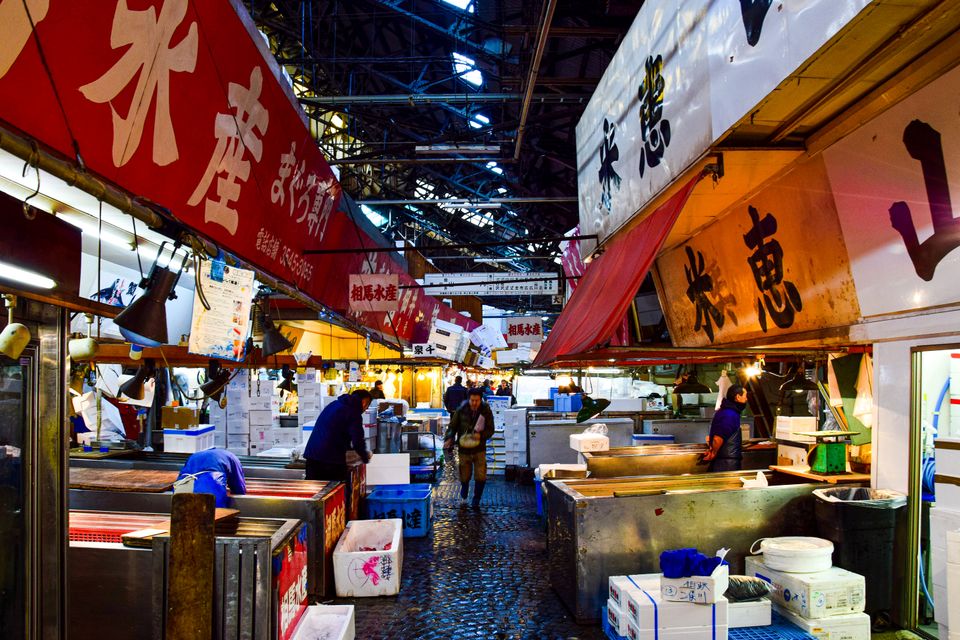
When the wholesale tuna auctions moved to Toyosu in 2018, the outer market stayed put: 400 shops and stalls selling knives, dried seafood, pickles, ceramics, and breakfast sushi. The market wakes at 5:30 a.m.; by 6 a.m. the tamagoyaki vendors are flipping rectangular omelets on copper pans, the tsukemono shops are arranging pickled daikon in perfect rows, and the sushi counters are serving ten-piece omakase sets for ¥3,500. It's retail, not wholesale, but the quality is wholesale-grade—the same fish that goes to three-star restaurants, just sold in smaller lots.

Hamarikyu began as a Tokugawa hunting preserve in 1654, built on landfill that's been stable for 370 years. The centerpiece tidal pond is fed by Tokyo Bay through sluice gates that open twice daily, allowing black sea bream, mullet, and gobies to enter and exit with the current; egrets and herons work the shallows year-round. A 300-year-old pine—the garden's symbolic anchor—survived the 1923 earthquake and the 1945 firebombing. The Nakajima teahouse, rebuilt in 1983 on an island in the pond, serves matcha and seasonal wagashi for ¥700; boats to Asakusa depart from the northern pier every 35 minutes (¥1,040, 40-minute cruise).
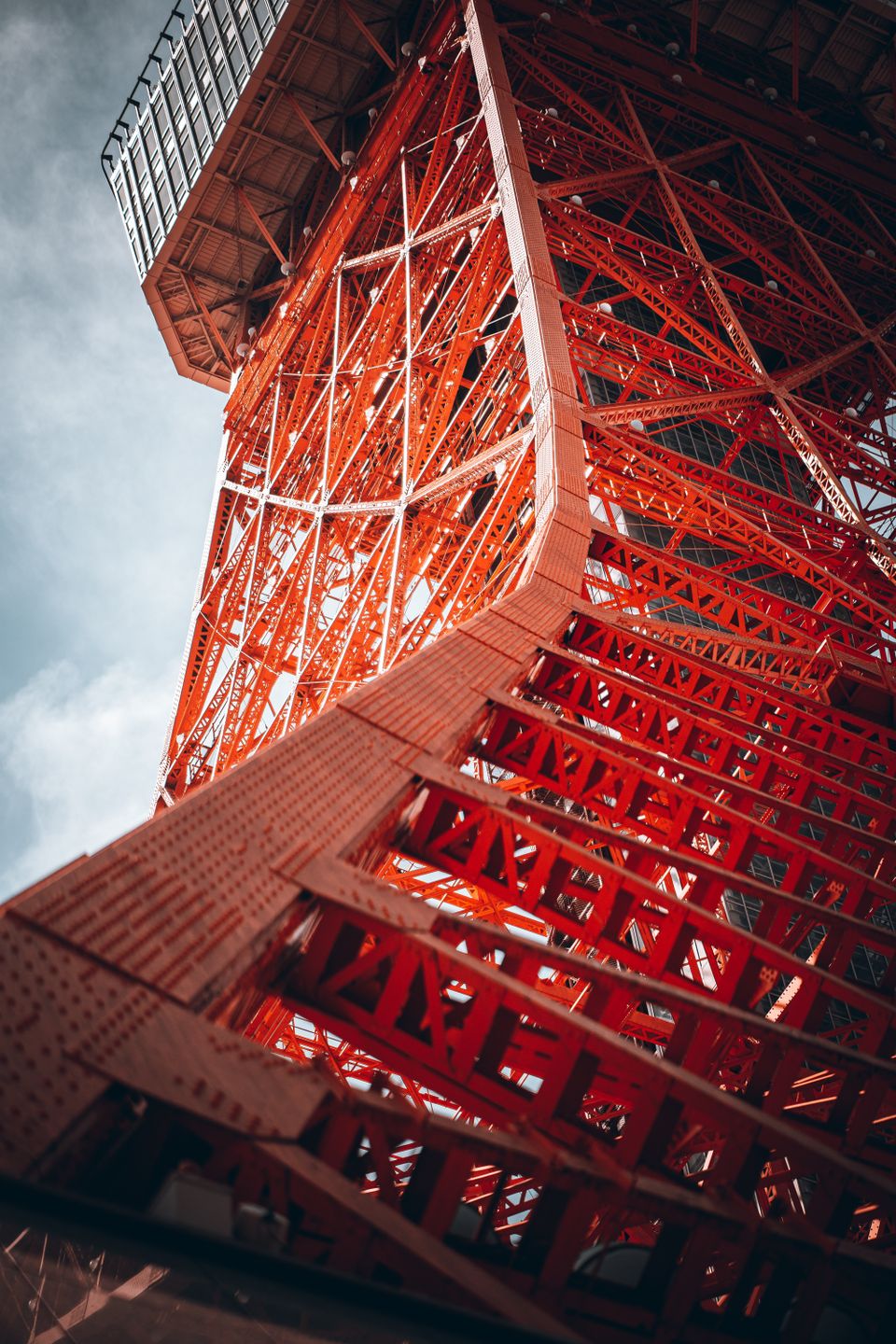
Completed in 1958 as Japan's tallest structure (333 meters), Tokyo Tower served as the city's main broadcast antenna until Tokyo Skytree took over in 2012. Its design is a near-copy of the Eiffel Tower, painted international orange and white to meet aviation regulations. The main deck at 150 meters and top deck at 250 meters offer 360° views; the structure itself—visible from Roppongi, Shibuya, and half of central Tokyo—functions as a nostalgic landmark, the Showa-era counterpoint to Skytree's Heisei modernity. At night, 176 floodlights illuminate the tower in one of two schemes: 'landmark light' (orange) in winter, 'diamond veil' (silver-white) in summer.
Average temperatures, crowds and recommended windows — at a glance, month by month.
Normales climatiques 1991–2020, Japan Meteorological Agency
Hanami turns Ueno Park into a 1,200-tree pink tunnel from late March; office workers claim spots at dawn with blue tarps and konbini beer, then party under the petals until the park closes at 8 p.m.
Rainy season in June turns the streets into steam rooms; July and August hit 32°C with 70% humidity, but that's when the Sumida River fireworks draw a million spectators and every department store basement sells kakigōri shaved ice in twenty flavours.
Mid-October through November delivers crystalline skies, 18–22°C, and the gingko trees along Meiji-jingū's approach turning a yellow so saturated it looks retouched; this is the city's finest weather and everyone knows it.
Temperatures drop to 5–10°C but the air is dry and clear—Mt. Fuji appears on half the days in January. New Year sees the entire city shut down except for shrines, where three million people visit Meiji-jingū between January 1 and 3.
Tokyo holds more Michelin stars than Paris and still serves its best meals at counters where the chef knows your name by the third visit. You can spend ¥40,000 on a kaiseki marathon or ¥1,200 on conveyor-belt sushi that shames anything back home—the difference is ceremony, not craft.
Ten-piece sushi sets served from 6 a.m. at tile-walled counters; the tuna comes from the same auction lots that supply three-star temples. Watch the itamae torch the salmon belly with a handheld blowtorch.
Shoulder-to-shoulder at a six-seat grill; order five skewers and a lemon sour, pay ¥1,500, leave smelling of binchotan smoke. The liver skewers come with a dot of karashi mustard.
Kyoto's three-star tradition transplanted to Akasaka: thirteen courses that follow the season to the week. In October, expect matsutake custard and persimmon dressed in white miso; in April, bamboo shoots the thickness of a thumb.
Three Michelin stars for a kitchen that treats Hokkaido uni and Brittany butter with equal reverence. The sommelier steers you to sake pairings if you ask; the dining room holds thirty-two seats and zero raised voices.
At high-end counters, tip is offensive—your respect is expressed by finishing every grain of rice and not dousing the fish in soy sauce. Dip fish-side down, one quick touch, or the chef will judge you.
Our engine builds your days hour by hour, based on your actual dates.
Build my trip →The breakdown by category below — each range still depends on your choices.
4 nights: €500–800 (two people, mid-range)
Total meals, 4 days (2 people): €240–400
4 days (2 people, metro + airport): €80–120
4 days (2 people, mixed entries): €60–120
Ghibli Museum releases tickets one month in advance and sells out within hours; teamLab Borderless moved to Azabudai Hills in 2024—confirm the current location before you go.
Many small restaurants, shrines, and shops accept only yen cash; withdraw from 7-Eleven or post-office ATMs, which take foreign cards 24/7.
Most national museums (Tokyo National Museum, National Art Center) close Mondays; if Monday is a holiday, they close Tuesday instead.
Many onsen, sento, and gym facilities ban visible tattoos; some offer cover-up stickers, others have private baths—check policies in advance.
Yamanote and Chuo lines run at 200% capacity 7:30–9 a.m. and 5–7 p.m.; platform staff physically push commuters into cars. Avoid if you can; if you can't, brace yourself and protect your ribs.
Konbini sell concert tickets, pay utility bills, and have clean bathrooms in the back (ask for 'toire'); the fried chicken at Lawson and FamilyMart rivals actual restaurants.
Four days covers the core circuits—Asakusa's temples, Shibuya's neon, a morning market, one premium meal, and enough metro time to understand the grid. You won't exhaust the city (nobody does), but you'll leave with a functional mental map and a dozen reasons to return.
Tokyo can be shockingly cheap or ruinously expensive, often on the same block. A filling ramen lunch costs ¥900 (€6), a three-star kaiseki dinner ¥40,000 (€270). Accommodation and transport are moderate by global-capital standards; splurge on one great meal and let konbini and standing bars handle the rest.
No, but learn to read hiragana for train signs and restaurant menus. Subway station names are in romaji; Google Maps works flawlessly; pointing and bowing get you through 90% of transactions. Staff at major museums and hotels speak English; izakaya cooks and taxi drivers mostly don't, and that's part of the texture.
Not as a whole—the 23 wards span 627 square kilometers. But individual neighborhoods (Asakusa, Harajuku, Ginza) are superbly walkable, and the metro is so fast and frequent that you'll chain three districts in an afternoon. Wear comfortable shoes; you'll log 15,000–20,000 steps a day without trying.
Late March through early April, typically peaking around March 28–April 5, though climate shifts are pushing dates earlier. Ueno Park and Shinjuku Gyoen are the classic spots; expect crowds to match the beauty. If you miss sakura, wisteria blooms in late April and autumn leaves run mid-November through early December.
Curated places, an itinerary optimized around your dates — endlessly editable.


